

For the ardent home barista, the journey to the perfect espresso shot is a quest for precision, control, and consistency. While manual lever machines like the Flair espresso maker offer an unparalleled tactile experience and exceptional shot quality, they often come with limitations regarding steam for milk-based drinks, capacity for entertaining, or the sheer manual effort required for daily use. Navigating the myriad of options for the best flair espresso maker alternatives means striking a balance between convenience, automation, and uncompromising extraction. This guide cuts through the noise, detailing machines that offer enhanced functionality, robust construction, and repeatable results without sacrificing the art of espresso, providing worthy upgrades or different approaches to your daily ritual.
Contents
Elevating Your Brew: Top Espresso Maker Alternatives for the Discerning Home Barista
1. Gevi Dual Boiler Espresso Machine
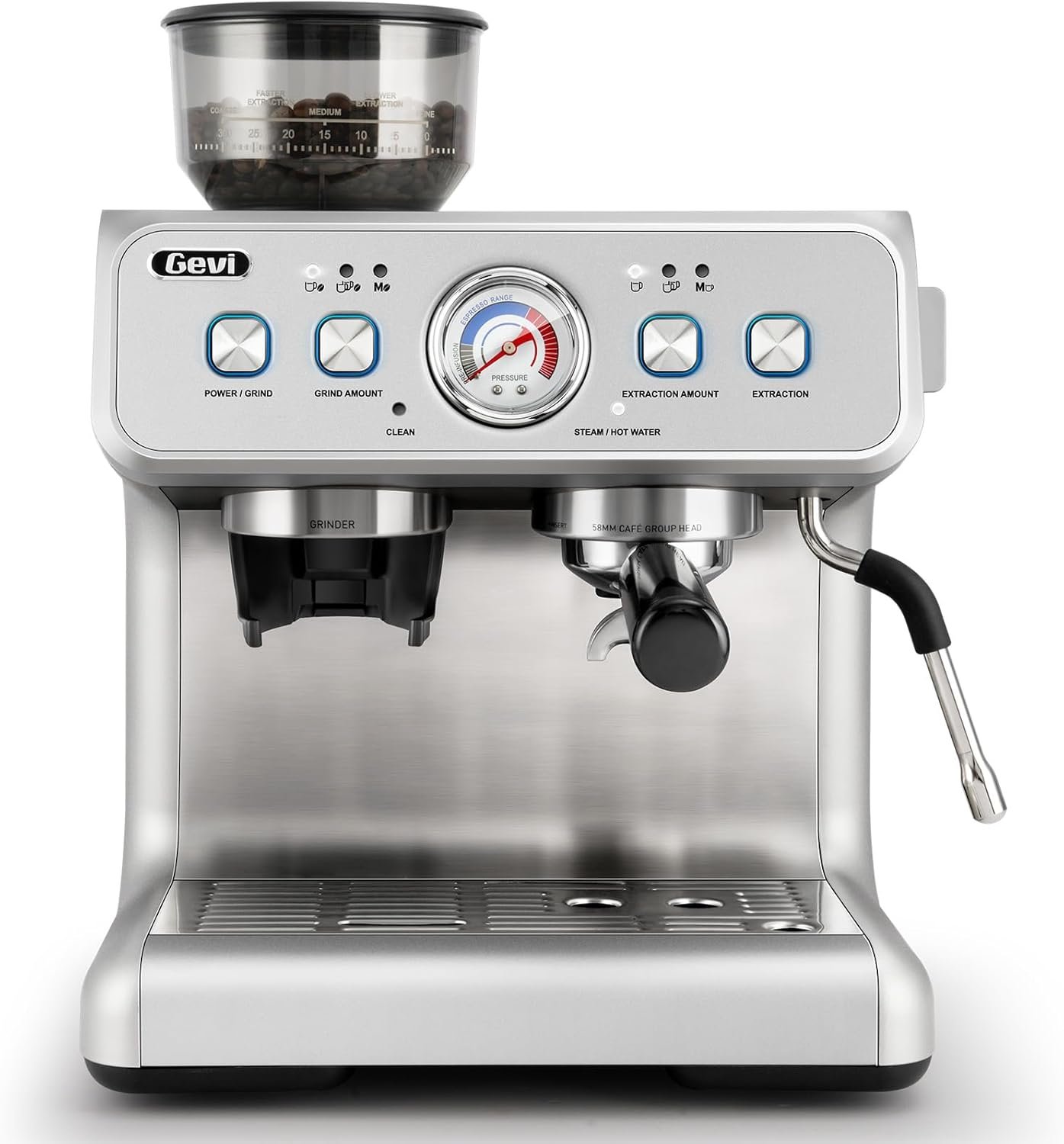
Expert Rating: 4.5/5 Stars | Est. Price Bracket: $359.98
The home espresso market is saturated with compromises. Enthusiasts often wrestle with unstable temperatures, inconsistent grind quality, and anemic steam wands. Gevi steps into this arena with a machine that, on paper, promises to address many of these critical technical shortcomings for the serious home barista.
Technical Breakdown
- Dual Boiler Architecture: This machine employs a dedicated dual boiler system, a critical technical advantage allowing for simultaneous espresso extraction and steam generation without compromising temperature stability in either circuit. This mitigates the common thermal lag found in single thermoblock or heat exchange systems.
- NTC & PID Temperature Regulation: Integrated NTC (Negative Temperature Coefficient thermistor) sensors coupled with PID (Proportional-Integral-Derivative) controllers meticulously maintain and regulate the temperatures of both the brew water and steam boiler. This system ensures repeatable thermal stability for consistent extraction profiles and optimal steam quality.
- Integrated Conical Burr Grinder: Featuring an integrated grinder with 31 distinct grind settings, this component aims to provide a unified solution. While the convenience is undeniable, the true test lies in the consistency and precision across its finer settings crucial for espresso.
- 58mm Commercial Portafilter: The inclusion of a standard 58mm portafilter is a welcome specification. This commercial-grade dimension offers better thermal mass and compatibility with a vast ecosystem of professional-grade accessories, enhancing both workflow and potential for shot refinement.
- Advanced Pressure Control: The system is designed to modulate water flow and pressure during extraction, aiming to achieve the specified 9-bar pressure profile for optimal espresso solubles dissolution. Consistent pressure application is paramount for preventing channeling and ensuring even extraction.
The Real-wold Performance
In practical application, the Gevi’s dual boiler and PID control deliver on the promise of thermal stability, translating directly into consistent shot temperatures. This precision is evident in the extracted espresso, where flavor profiles are notably balanced, avoiding the sourness of under-extraction or the bitterness of over-extraction often caused by thermal fluctuations. The robust 58mm portafilter contributes to even puck saturation, leading to uniform extraction and a dense, persistent crema layer with good tiger striping, indicating healthy solubles transfer. The steam wand, powered by its dedicated boiler, produces ample dry steam, facilitating the creation of microfoam suitable for intricate latte art, provided the user has honed their technique.
Who is this for?
This machine is purpose-built for the discerning home barista demanding technical control and café-quality results from a single, integrated appliance.
Data Breakdown
| Specification | Detail |
|---|---|
| Portafilter Diameter | 58mm (Commercial Standard) |
| Grind Settings | 31 |
| Temperature Control | NTC & PID System |
| Boiler Type | Dual Boiler |
| Construction Material | Stainless Steel |
| Integrated Component | Built-in Conical Burr Grinder |
The Good:
- True dual boiler system for simultaneous, stable brewing and steaming.
- Precise NTC & PID temperature regulation for consistent shot quality.
- Integrated conical burr grinder with 31 settings for convenience.
- Commercial-grade 58mm portafilter for professional workflow and thermal mass.
- Excellent pressure control and even extraction resulting in balanced flavors and dense crema.
The Trade-offs (Cons):
- Integrated grinder, while convenient, may not match the consistency of a dedicated high-end grinder.
- Higher learning curve than fully automatic machines due to manual control.
- Initial setup and dial-in can be time-consuming.
2. Gaggia Classic Evo Pro
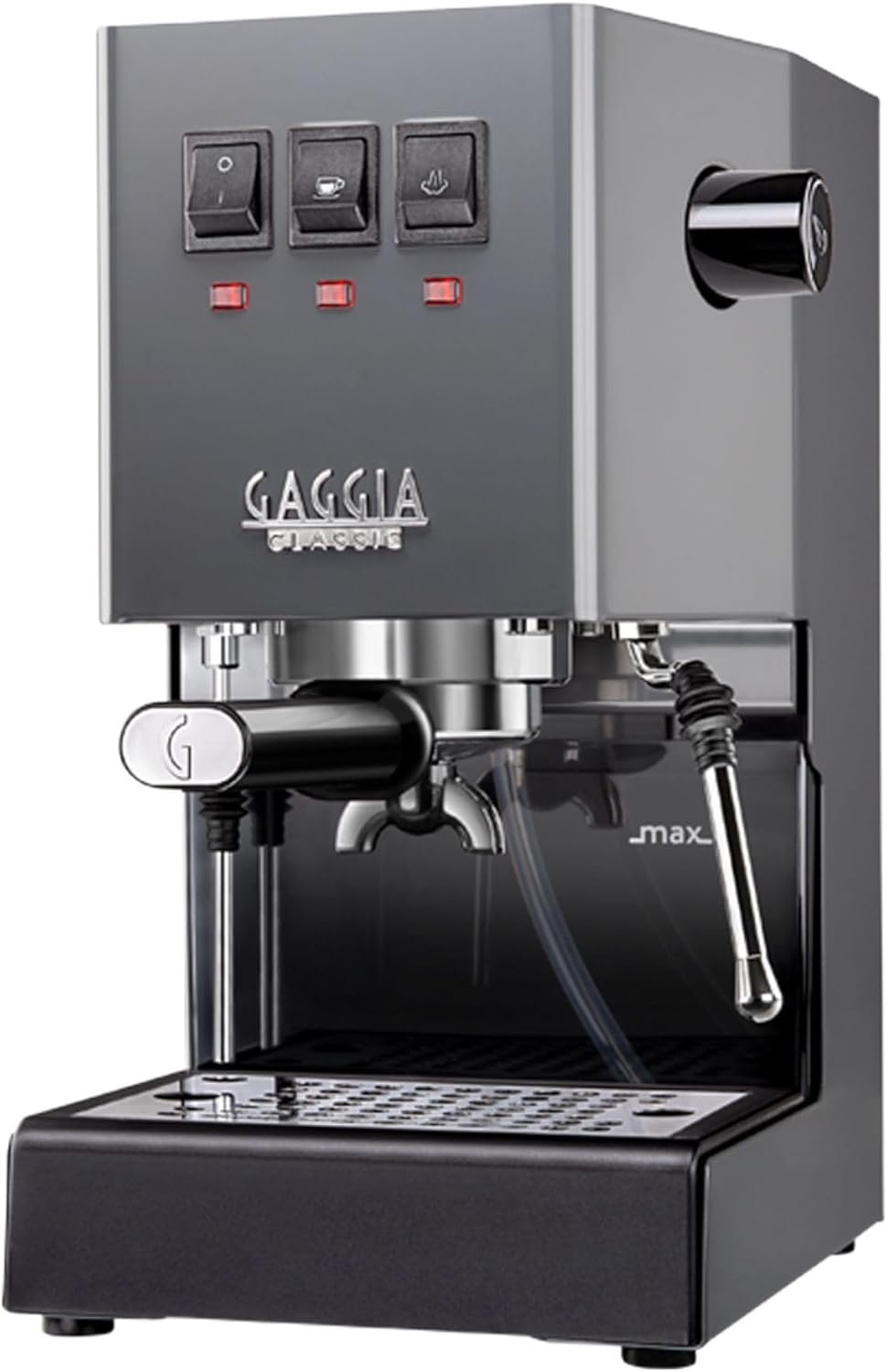
Expert Rating: 4.4/5 Stars | Est. Price Bracket: $529.99
For the home barista who refuses to compromise on quality, the Gaggia Classic Evo Pro emerges not just as an appliance, but a serious tool for espresso mastery. This machine distills decades of Italian espresso tradition into a compact, robust form, promising professional-grade extractions for the discerning enthusiast.
Technical Breakdown
- Solid Steel Housing, Made in Italy: The exterior isn’t just aesthetics; it’s a declaration of durability. Crafted with a full solid steel housing, this machine is built to endure countless extractions. Its ‘Made in Italy’ provenance assures adherence to rigorous manufacturing standards and a heritage steeped in espresso culture.
- 9 Bar Espresso Extractions: The 9-bar extraction pressure isn’t merely a number; it’s the scientifically optimal standard for balanced espresso. Unlike pump-driven machines that often over-pressurize, the Evo Pro ensures a controlled, precise flow, critical for extracting the full spectrum of soluble solids without bitterness.
- Stainless Steel 58mm Commercial Portafilter: This isn’t a scaled-down toy. The 58mm commercial-grade portafilter is the industry standard, offering superior thermal mass for temperature stability and ample surface area for even puck saturation. Its robust stainless steel construction guarantees longevity and professional feel.
- Commercial Three Way Solenoid Valve: A hallmark of true espresso machines, the commercial three-way solenoid valve immediately depressurizes the group head post-extraction. This feature eliminates messy drips, dries out the coffee puck, and allows for an effortlessly clean knock-out every single time, signifying serious design intent.
- Commercial Steam Wand: Forget rudimentary panarello wands. The commercial steam wand provides robust, dry steam with precise articulation, empowering the user to texture silky microfoam for lattes and cappuccinos with professional-level control and consistency, a cornerstone for true latte art.
The Real-world Performance
In the cup, the Classic Evo Pro, when properly dialed in, produces rich, full-bodied espresso with commendable clarity and depth of flavor. While a single boiler system inherently demands some temperature surfing for ultimate stability, a skilled user can achieve consistent shot temperatures that yield excellent, thick crema and reveal the subtle nuances of quality beans. The machine’s solid engineering allows for repeatable extractions, making the journey from bean to espresso a rewarding process.
Who is this for?
This machine is ideal for the dedicated home barista eager to hone their craft and understand the mechanics of professional espresso.
Data Breakdown
| Specification | Detail |
|---|---|
| Housing Material | Solid Steel |
| Origin | Italy |
| Extraction Pressure | 9 Bar (Optimal) |
| Portafilter Size | 58mm Commercial |
| Valve Type | Three-Way Solenoid |
| Steam System | Commercial Wand |
The Good:
- Robust “Made in Italy” solid steel housing ensures exceptional durability.
- Optimal 9-bar extraction pressure for balanced, flavorful espresso.
- Commercial-grade 58mm portafilter and three-way solenoid valve for professional results and easy cleanup.
- Powerful commercial steam wand capable of producing excellent microfoam for latte art.
- Highly repairable and modifiable, making it a long-term investment for enthusiasts.
The Trade-offs (Cons):
- Single boiler system requires “temperature surfing” for optimal brewing and steaming temperatures, adding a step to the workflow.
- No integrated grinder, requiring a separate purchase.
- More hands-on operation means a steeper learning curve than automated machines.
3. Breville Barista Touch Impress
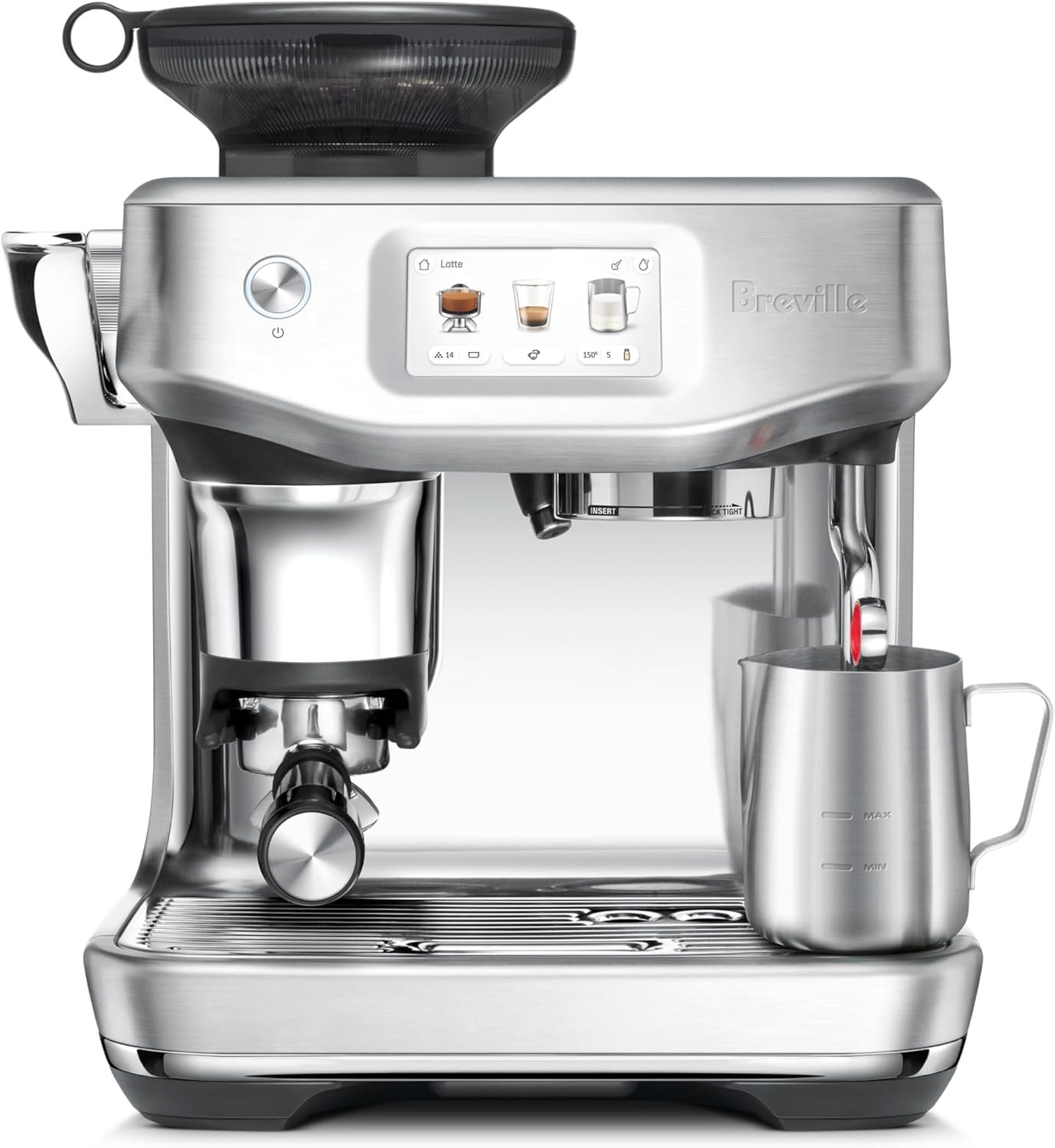
Expert Rating: 4.0/5 Stars | Est. Price Bracket: $1004.95
The Breville Barista Touch Impress promises a streamlined approach to café-quality espresso at home. This certified remanufactured unit undergoes rigorous inspection, ensuring its core functionalities meet the stringent performance standards expected from its new counterpart. Our assessment delves into its technical prowess and real-world output, evaluating its claim to simplify advanced espresso techniques.
Technical Breakdown
- Integrated Grinding & Dosing: The Impress Puck System features an integrated conical burr grinder with intelligent dosing and 22lb assisted tamping, dynamically correcting subsequent doses for optimal puck consistency, culminating in a 7° rotational finish.
- Precision Temperature & Pressure: Utilizes a ThermoCoil heating system for rapid heat-up and PID temperature control, ensuring precise water temperature delivery, complemented by controlled pre-infusion and consistent 9-bar extraction pressure.
- Automated Milk Texturing: The Auto MilQ steam wand provides hands-free milk texturing with optimized settings for various dairy and plant-based milks, offering 8 texture levels and adjustable temperatures from 104°F to 167°F.
- Cold Extraction Capability: Features dedicated profiles for Cold Brew (under 3 minutes) and Crema-topped Cold Espresso (under 2 minutes), employing lower temperature extraction to mitigate acidity and yield a smoother, lighter flavor profile.
The Real-wold Performance
In practical application, the Barista Touch Impress exhibits commendable performance in extracting a balanced espresso shot. Flavor profiles are consistently articulate, preserving bean-specific nuances, largely due to the precise PID temperature control minimizing thermal variance. Crema is generally dense and sustained, indicative of adequate extraction pressure and optimal puck integrity. The Auto MilQ system renders a consistently fine microfoam suitable for basic latte art, though advanced textural manipulation remains the domain of skilled manual steaming.
Who is this for?
This machine is suited for the discerning home enthusiast seeking advanced espresso technology with automated guidance and repeatable results, without the extensive manual learning curve.
Data Breakdown
| Specification | Detail |
|---|---|
| Dosing System | Intelligent Dosing with Auto-Correction (Impress Puck System) |
| Tamping Mechanism | 22lb Assisted Tamping with 7° Barista Twist |
| Milk Temperature Range | 104°F to 167°F (Adjustable) |
| Milk Texture Levels | 8 levels (Adjustable) |
| Cold Brew Extraction Time | < 3 minutes |
| Cold Espresso Extraction Time | < 2 minutes |
The Good:
- Highly automated Impress Puck System for intelligent dosing and assisted tamping, simplifying puck preparation.
- PID temperature control and controlled pre-infusion for precise and consistent espresso extraction.
- Hands-free automated milk texturing with adjustable settings for various milk types.
- Unique cold extraction capabilities for quick cold brew and cold espresso beverages.
- Intuitive touchscreen interface makes operation user-friendly.
The Trade-offs (Cons):
- High price point makes it a significant investment.
- Automated features limit manual control, which may not appeal to purist baristas seeking full customization.
- While automated milk frothing is good, it may not achieve the same level of microfoam quality as a skilled manual steaming wand.
- Certified remanufactured unit, though inspected, might carry a psychological preference for a new machine for some buyers.
4. HIBREW H10B
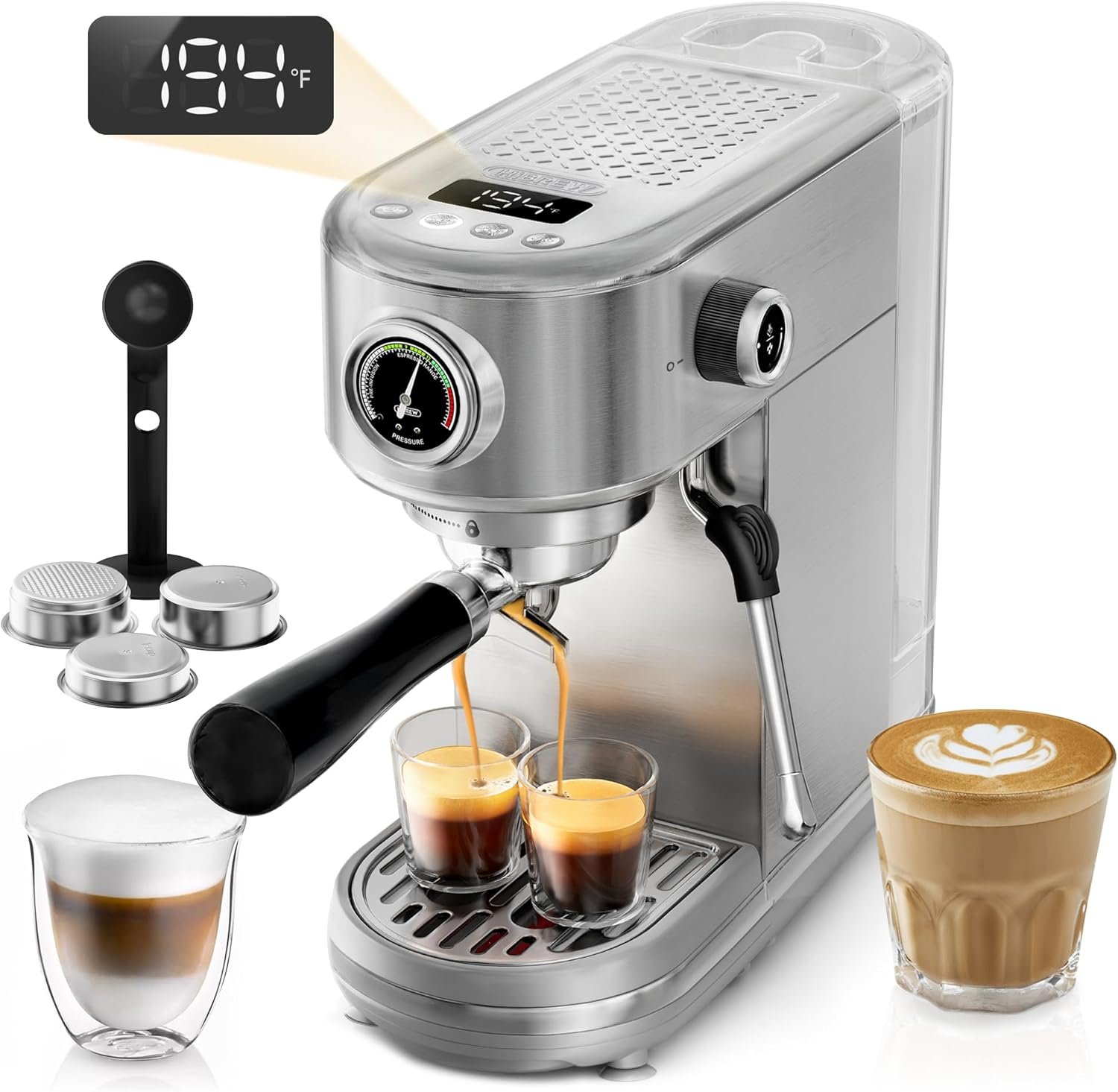
Expert Rating: 4.5/5 Stars | Est. Price Bracket: $169.99
The HIBREW H10B, presented as an ‘Upgraded Professional Espresso Machine,’ enters the competitive prosumer segment with a specified 20-bar pump and NTC thermal regulation. Our assessment scrutinizes whether its advertised technical capabilities translate into tangible, consistent espresso extraction suitable for the discerning home barista.
Technical Breakdown
- Pressure & Thermal Regulation: Features a nominal 20-bar vibratory pump, with actual extraction pressure modulated by the finely tuned NTC temperature sensor. This sensor is critical for dynamic thermal stability, ensuring consistent brew water temperature throughout the shot cycle.
- Adjustable Pre-infusion Profile: Offers user-defined pre-infusion parameters, allowing for precise control over the initial saturation phase of the coffee puck. This function is essential for mitigating channeling and promoting uniform extraction, directly impacting cup quality.
- Integrated User Feedback: Incorporates a front-facing analog pressure gauge for real-time visualization of extraction pressure. Complementing this is an intuitive LED digital display that dynamically switches from standby temperature indication to an active extraction timer, providing critical data during operation.
- Programmable Brewing Parameters: Provides granular control over key brewing variables including extraction temperature (adjustable from 194°F to 204°F in precise increments) and customizable volumetric dosing for single and double shots.
- Construction Material: The machine’s exterior is crafted from food-grade brushed stainless steel, offering robust durability and simplified maintenance. Its compact physical footprint is designed for optimal counter space utilization without compromising functional integrity.
The Real-wold Performance
In practical application, the H10B demonstrated commendable thermal stability, with the NTC sensor proving effective in maintaining a consistent brew temperature throughout extraction. While the 20-bar pump rating often implies higher pressure than necessary, the adjustable pre-infusion genuinely aids in preventing channeling, resulting in a balanced flavor profile devoid of significant bitterness or sourness. Crema generation was moderate but consistent, indicating adequate extraction and pressure management within its class.
Who is this for?
This machine is engineered for the intermediate home barista demanding programmable control and consistent espresso in a space-optimized setup.
Data Breakdown
| Specification | Detail |
|---|---|
| Model | HIBREW H10B |
| Pump Pressure | 20 Bar (Nominal) |
| Temperature Control | NTC Sensor |
| Adjustable Temp Range | 194°F – 204°F |
| Pre-infusion | Adjustable |
| Display Type | LED Digital (Temp/Timer) |
| Construction Material | Food-Grade Stainless Steel |
The Good:
- NTC thermal regulation ensures commendable and consistent brew water temperature.
- Adjustable pre-infusion allows for finer control over extraction, reducing channeling.
- Integrated pressure gauge and LED timer provide essential real-time feedback for brewing.
- Programmable brewing parameters for temperature and volumetric dosing offer customization.
- Durable food-grade brushed stainless steel construction and compact design.
The Trade-offs (Cons):
- Nominal 20-bar pump pressure is often higher than optimal for espresso and may be primarily a marketing figure.
- Requires a separate grinder, adding to the overall cost and footprint.
- Crema generation is moderate, not as robust as higher-tier machines.
- Steam wand performance for true microfoam may require significant user skill.
5. CASABREWS 3700 Essential Espresso Machine
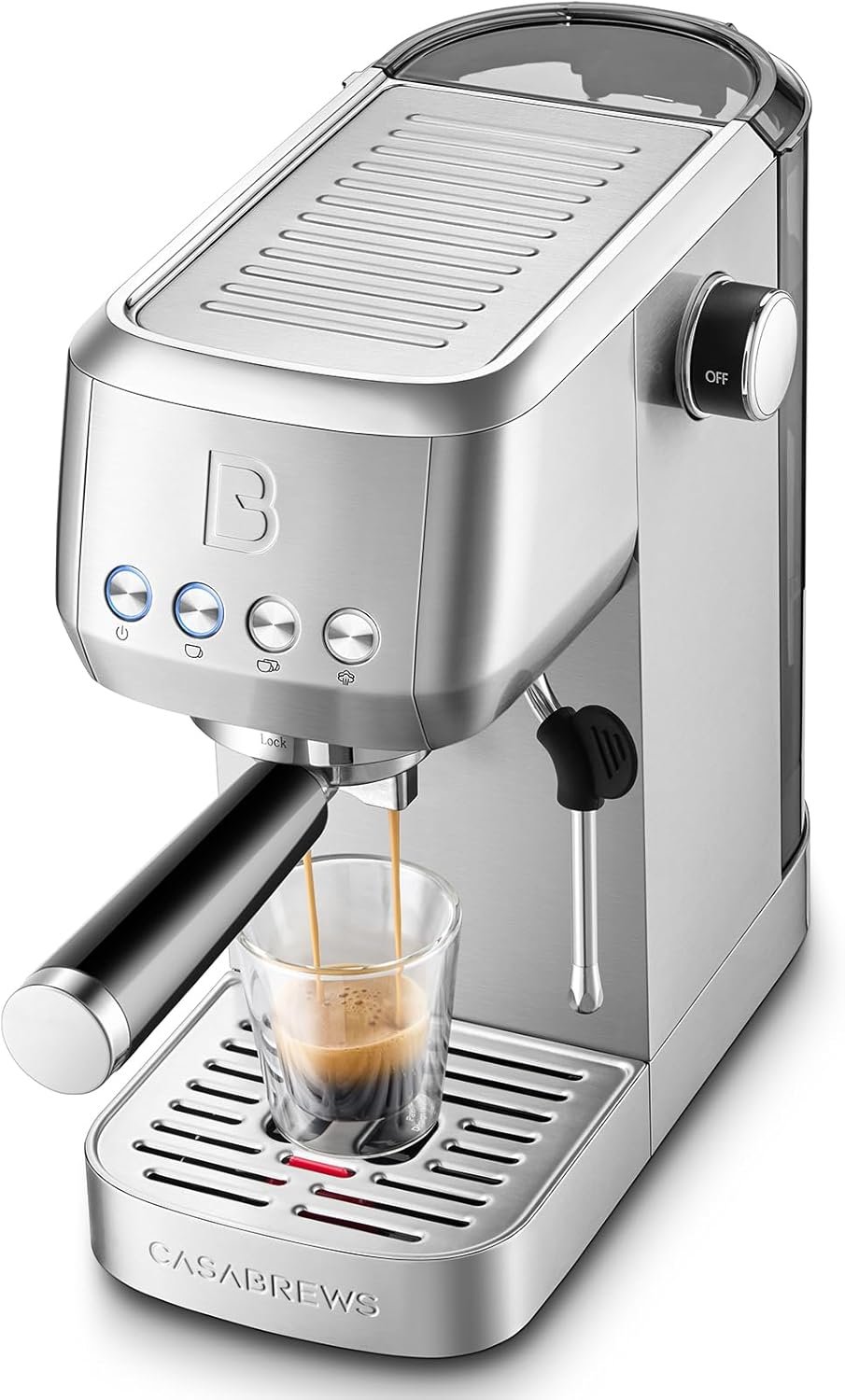
Expert Rating: 4.3/5 Stars | Est. Price Bracket: $109.99
The CASABREWS 3700 Essential presents itself as an accessible entry point into home espresso, promising cafe-quality beverages with its 20-bar pump. As critical evaluators, we dissect its capabilities beyond the marketing claims to determine if it truly delivers on its core promise of essential extraction and milk texturing.
Technical Breakdown
- 20-Bar Pressure System: The inclusion of a 20-bar professional pump is notable, though the practical application for ideal espresso extraction typically falls within 9-15 bars. This higher pressure often serves as a marketing point; however, a robust pump is essential for consistent pre-infusion and full extraction without channeling, provided the grind is correctly calibrated.
- 1350 W Heating System: A 1350-watt thermoblock system suggests rapid heat-up times and adequate power for steam generation. Temperature stability during extraction, crucial for preserving delicate flavor notes, will depend on the thermal mass and control mechanisms within this heating element.
- Milk Frothing System: The “powerful steam wand” description points to a single-hole or panarello-style wand. Its effectiveness in producing true microfoam for latte art, rather than just aerated milk, relies heavily on its pressure output and the user’s technique.
- 43.9 oz Water Tank: This substantial 1.3-liter capacity is practical for multiple serves without frequent refilling, enhancing user convenience for a home or small office setting. Its detachability is a standard, beneficial feature for ease of maintenance.
- Stainless Steel Appearance: While “stainless steel appearance” might imply cladding over plastic, a genuine stainless steel body contributes to durability and thermal stability, though the primary function of aesthetic appeal is often prioritized in this segment.
The Real-world Performance
Initial extractions from the CASABREWS 3700 yielded a decent volume of crema, albeit often lighter in color and dissipating quicker than from higher-tier machines, indicating a potential compromise in true aromatic richness. Flavor profiles tended towards the robust side, though temperature stability challenges became apparent on consecutive shots, leading to slight bitterness or sourness depending on the recovery time. The steam wand, while capable of heating milk quickly, produced a coarser foam rather than fine microfoam, requiring significant user skill to approach latte art consistency.
Who is this for?
This machine is ideal for the beginner home user seeking an entry-level espresso experience without significant upfront investment.
Data Breakdown
| Specification | Detail |
|---|---|
| Pump Pressure | 20 Bar Professional Pump |
| Heating System | 1350 W Thermoblock |
| Water Tank Capacity | 43.9 oz (approx. 1.3 L) |
| Material | Stainless Steel Appearance |
| Frothing System | Powerful Steam Wand |
| Machine Type | Semi-Automatic 2-in-1 Espresso Maker |
The Good:
- Extremely accessible price point for an entry-level espresso machine.
- Relatively quick heat-up time due to 1350W thermoblock heating system.
- Generous 1.3-liter water tank capacity reduces the frequency of refills.
- Compact design and stainless steel aesthetic blend well in most kitchens.
The Trade-offs (Cons):
- 20-bar pump often over-pressurizes, potentially leading to over-extraction or bitterness if not carefully managed.
- Noticeable temperature instability between consecutive shots, affecting flavor consistency.
- Steam wand produces coarser foam, making latte art challenging for beginners.
- “Stainless steel appearance” suggests cladding, not a full stainless steel build, impacting durability compared to higher-end machines.
Summary Verdict: Top Picks Compared
| Image | Product | Rating & Price | Action |
|---|---|---|---|
|
Gevi Dual Boiler | 4.5 Stars $359.98 |
Check Price |
|
Gaggia Evo Pro | 4.4 Stars $529.99 |
Check Price |
|
Breville B.T. Impress | 4.0 Stars $1004.95 |
Check Price |
|
HIBREW H10B | 4.5 Stars $169.99 |
Check Price |
|
CASABREWS 3700 | 4.3 Stars $109.99 |
Check Price |
Essential Factors When Choosing Your Espresso Maker Alternative
Moving beyond manual methods like the Flair espresso maker into the realm of semi-automatic machines introduces a new set of technical considerations vital for consistent, café-quality results. Understanding these core factors is crucial to selecting an alternative that truly elevates your home barista experience.
1. Thermal Regulation and Stability: The temperature of the brew water is arguably the most critical variable for espresso extraction. Inconsistent temperatures lead to unpredictable flavors – too low and your shot will be sour (under-extracted); too high and it will be bitter (over-extracted). Look for machines featuring advanced thermal control systems like PID (Proportional-Integral-Derivative) controllers or NTC (Negative Temperature Coefficient) sensors. Dual boiler machines represent the pinnacle of thermal stability, with separate boilers for brewing and steaming, allowing both functions to operate at their optimal temperatures simultaneously without compromise. Single boiler machines often require “temperature surfing,” where the user actively manages the boiler’s heating cycle to hit the right temperature for each function, a skill that adds complexity to the workflow.
2. Pressure Management and Portafilter Standard: Achieving the ideal espresso extraction requires precise pressure application, ideally around 9 bars. While many entry-level machines boast “15 or 20 bar” pumps, the actual pressure at the coffee puck is what matters, and excessive pressure can lead to channeling and poor extraction. Machines with controlled pre-infusion gently saturate the coffee before full pressure is applied, aiding in even extraction. Furthermore, the portafilter’s size is a key indicator of professional intent. A 58mm commercial-standard portafilter offers superior thermal mass, contributing to temperature stability, and a larger surface area for the coffee puck, promoting more uniform water flow and extraction compared to smaller, often proprietary, portafilters.
