


Achieving café-quality espresso at home shouldn’t be a guessing game. The Tuni G1 Conical Burr Grinder bridges the gap between pro-level precision and home-kitchen convenience, offering the consistency demanded by specialty coffee lovers. Whether you are dialing in a light-roast single origin for a syrupy espresso shot or grinding a coarse batch for a morning French Press, this grinder provides the control you need to unlock the true potential of your beans.
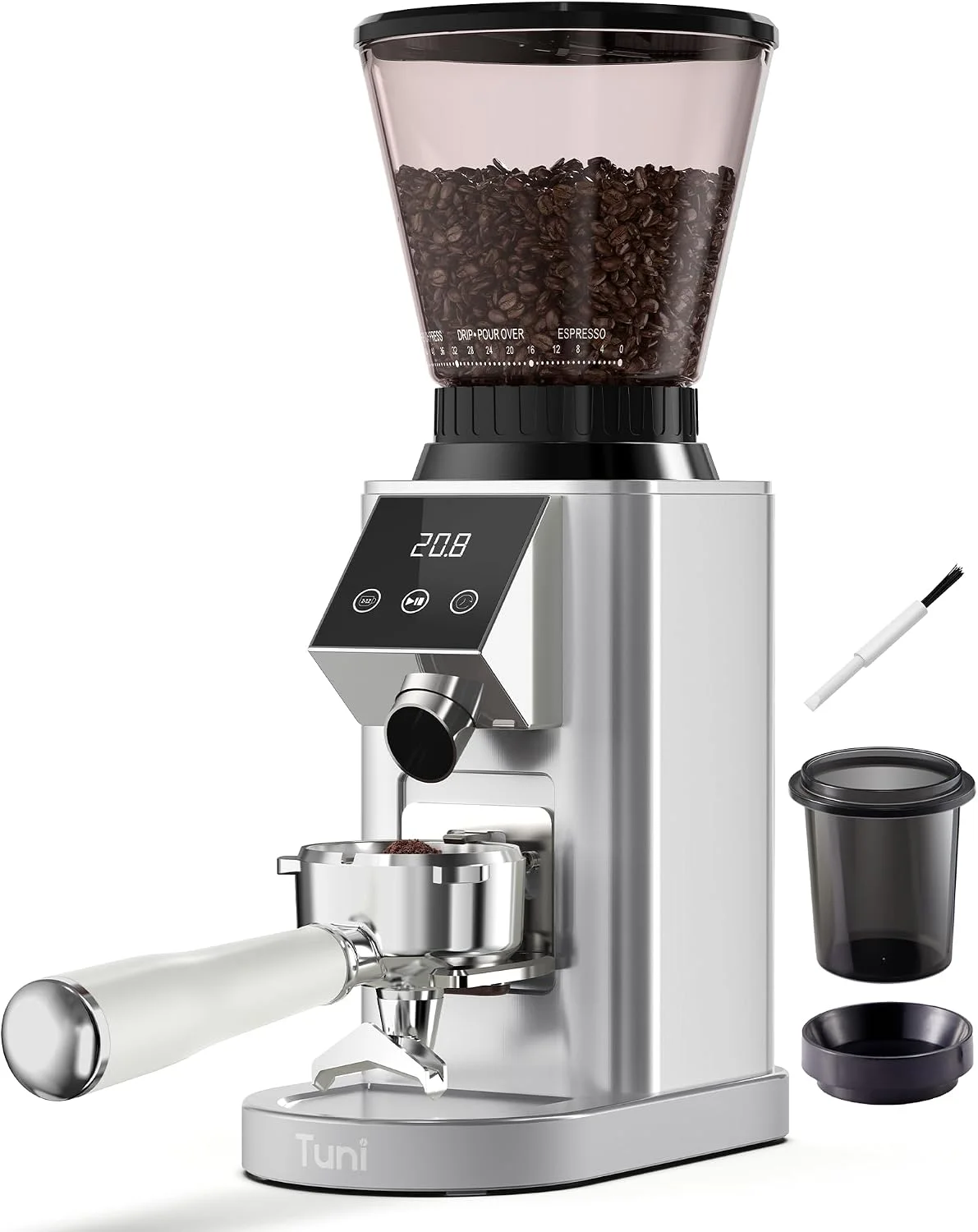
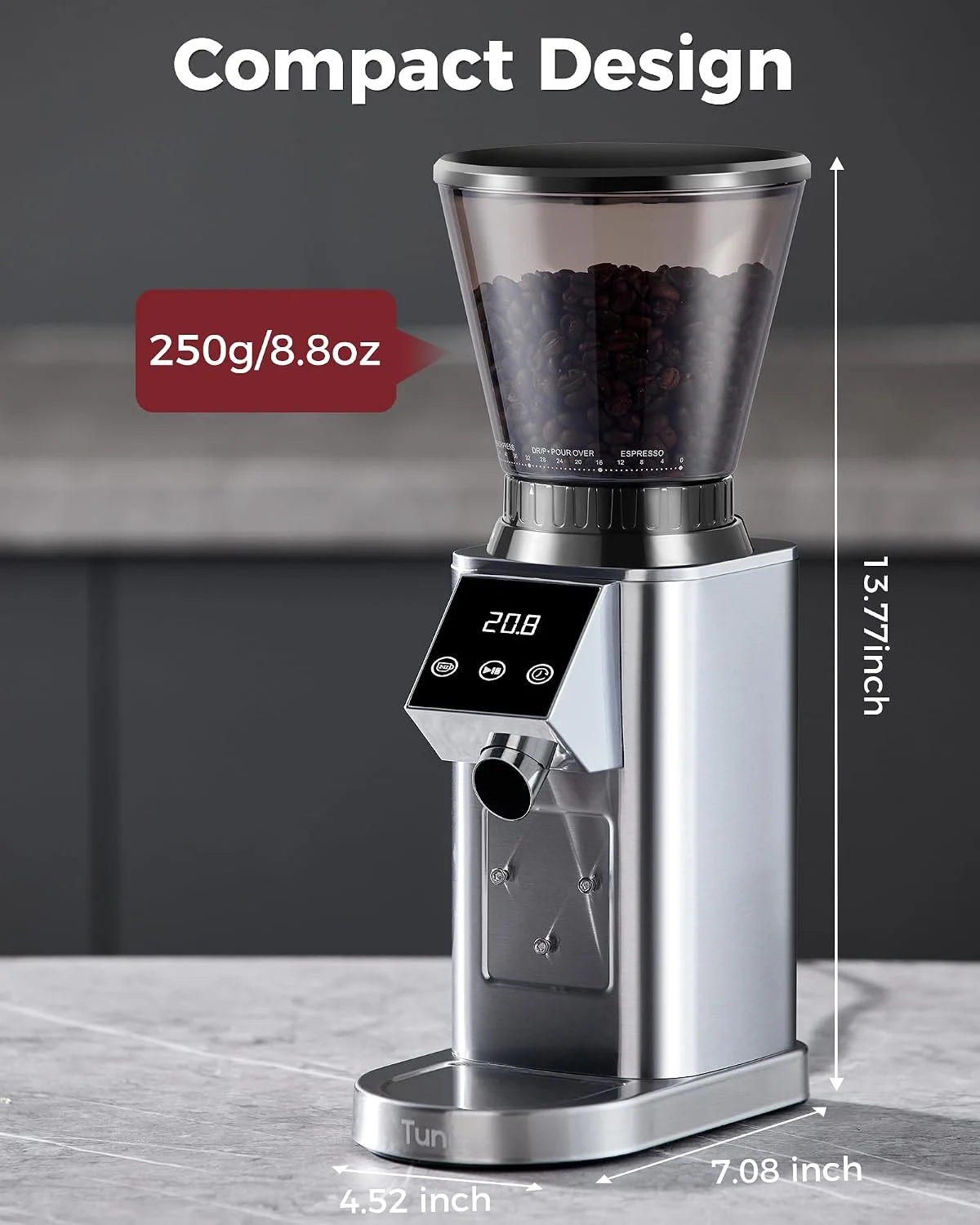
The Tuni G1 combines a compact footprint with high-end stainless steel aesthetics.
Contents
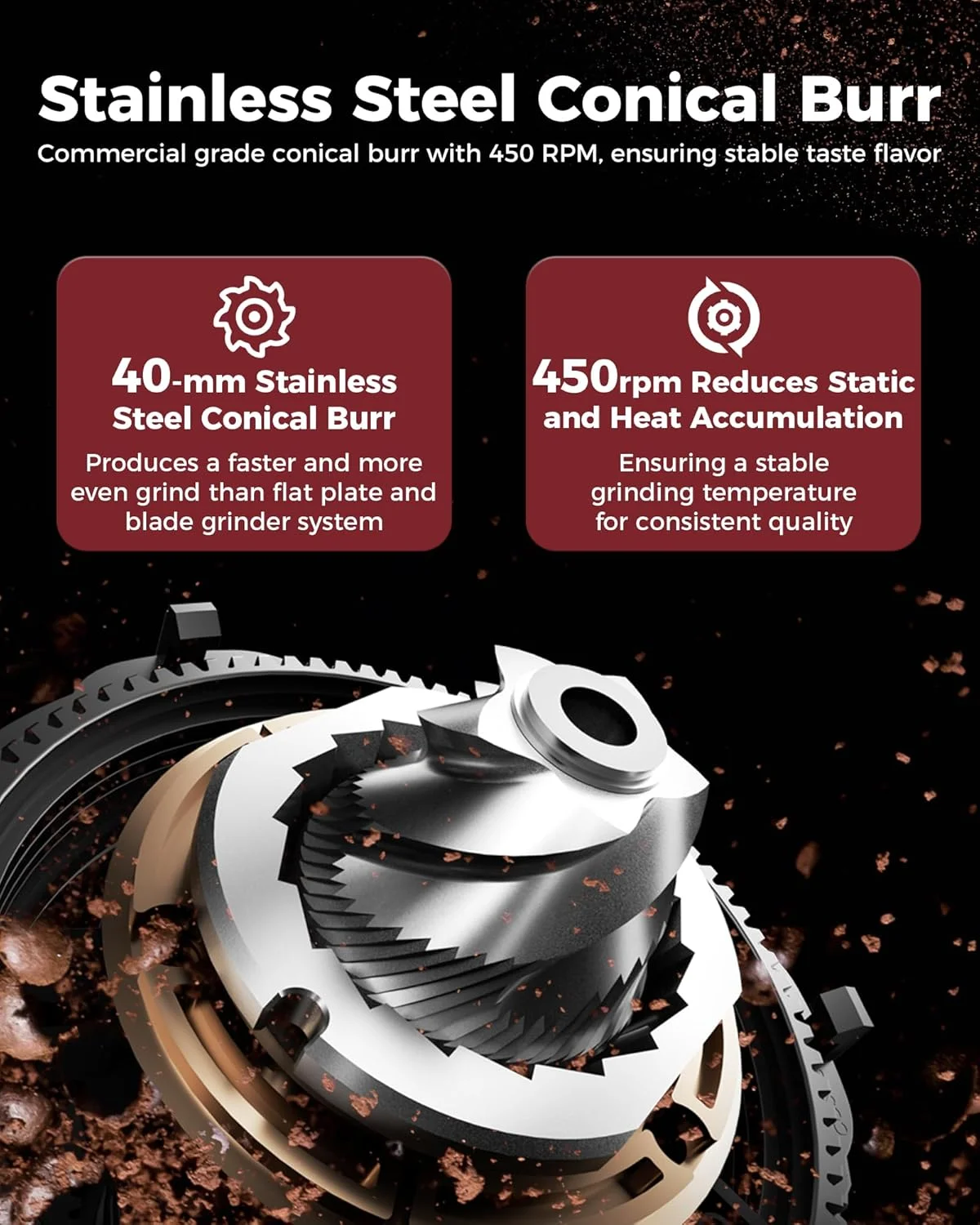
Unmatched Versatility with 48 Grind Settings
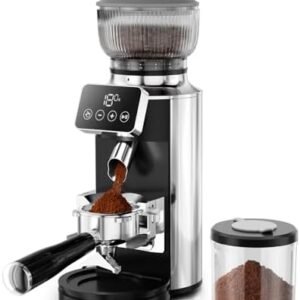
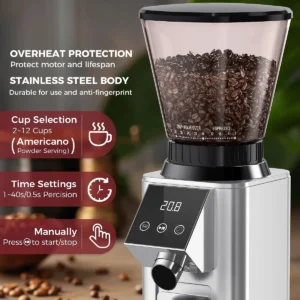
Precision is the hallmark of the Tuni G1. With 48 distinct grind settings, you can navigate seamlessly from ultra-fine espresso extractions to coarse French Press grinds. The electronic timer allows for granular adjustments in 0.5s increments up to 40 seconds, ensuring you can replicate your perfect recipe time and time again. With the integrated cup selection feature, you can easily calibrate your dosage from 2 to 12 cups.
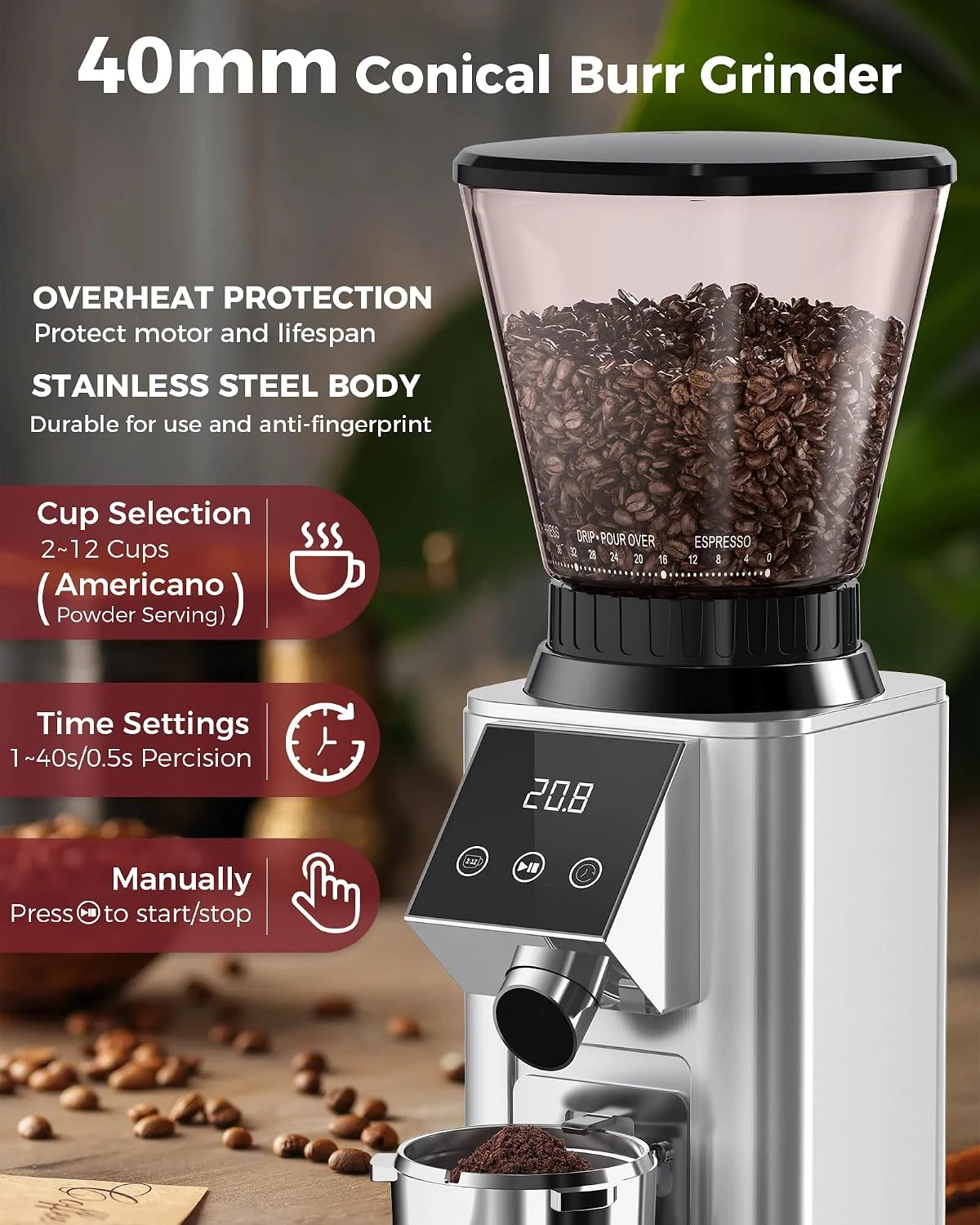
Intuitive LED touchscreen for effortless grind control.
Low-RPM Patented Conical Burr System
Heat is the enemy of flavor. The Tuni G1 utilizes a professional 40mm conical burr set operating at a gentle 450 RPM. By minimizing friction, the grinder prevents heat transfer to your beans, preserving the delicate aromatics and oils essential for a balanced cup. Furthermore, the patented anti-static technology ensures that your workspace stays clean, significantly reducing the mess commonly associated with home grinding.
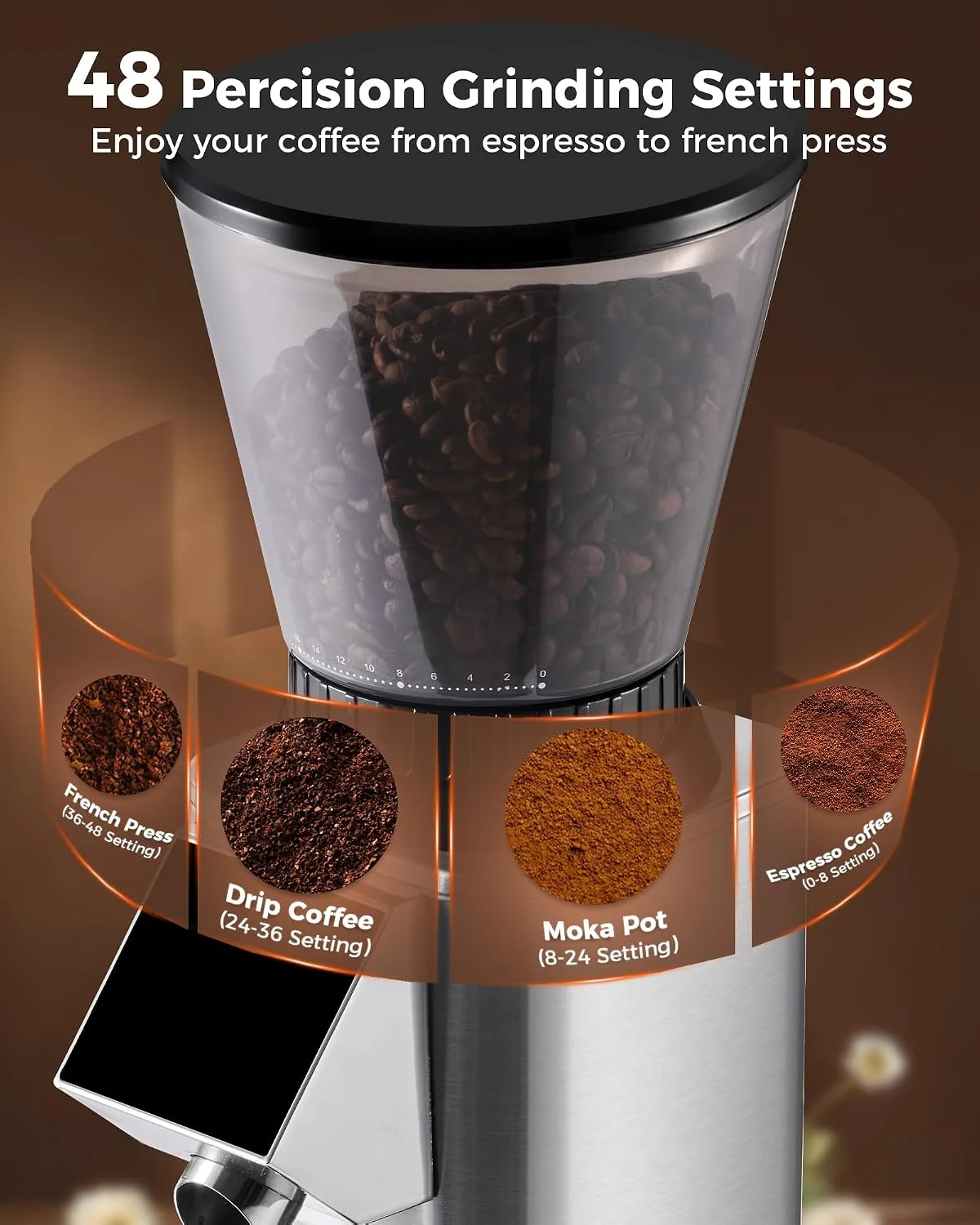
Patented conical burr design for consistent particle size distribution.
Designed for the Modern Workflow
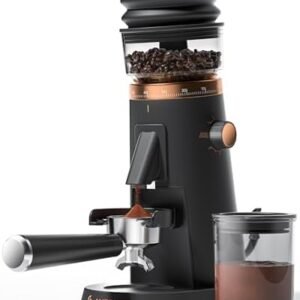
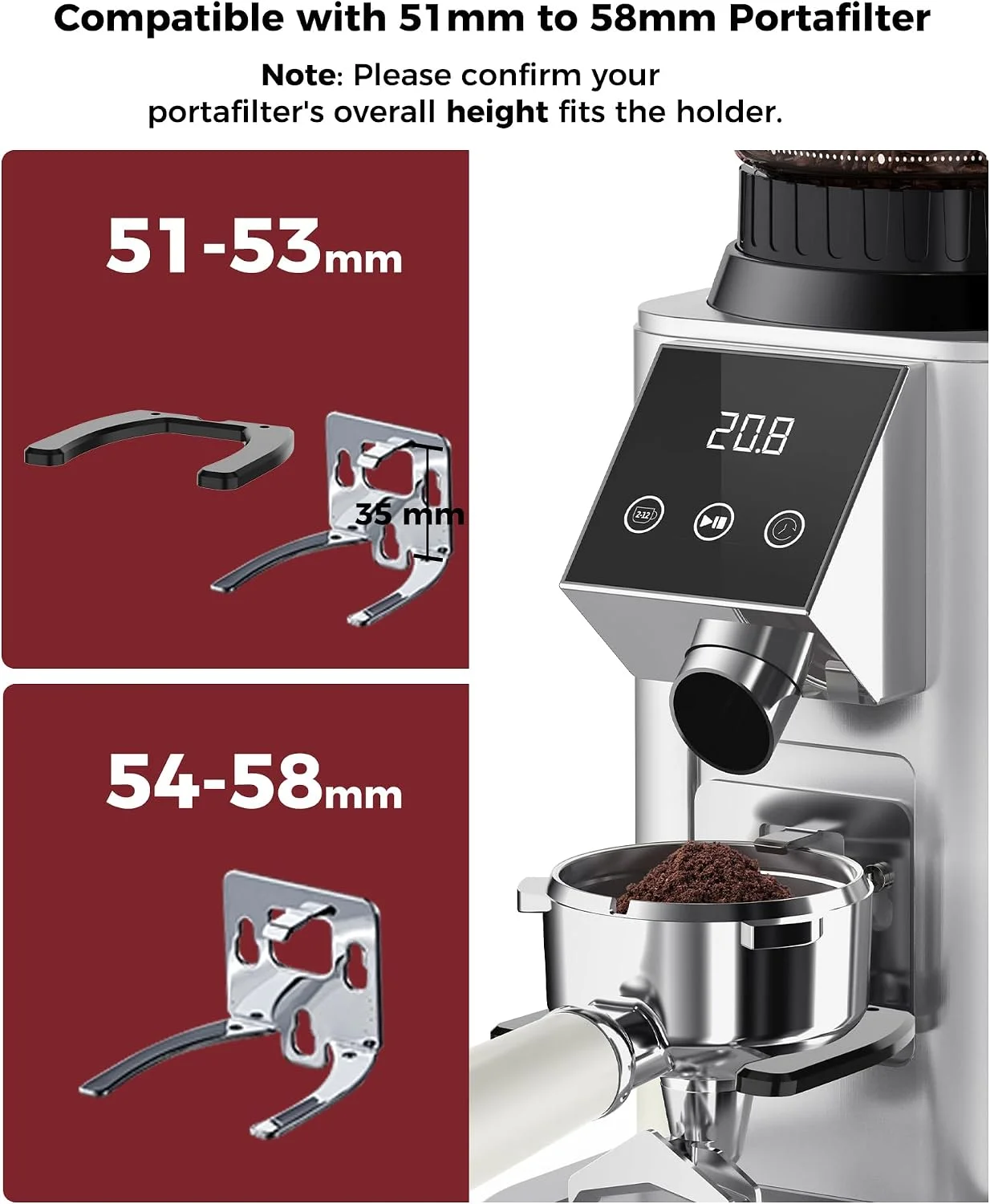
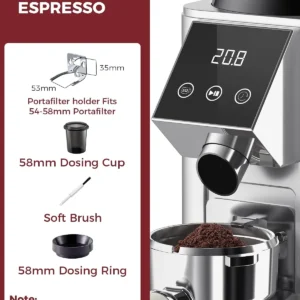
The Tuni G1 is built to fit seamlessly into your morning routine. The included detachable portafilter holder accommodates 54-58mm baskets, allowing you to grind directly into your handle for a streamlined workflow. If you prefer brewing larger batches, the included 75g dosing container makes transferring grounds to your dripper or French Press a breeze.
Direct-to-portafilter grinding saves time and reduces waste.
Compact Footprint, Large Capacity
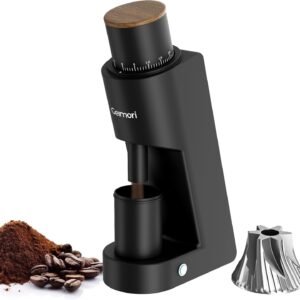
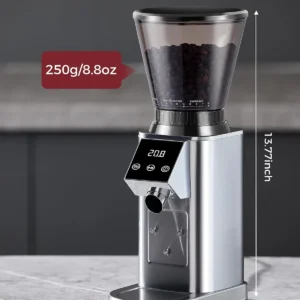
Despite its small 7.08″ x 4.52″ footprint, the Tuni G1 doesn’t sacrifice performance. It features a spacious 250g bean hopper, ensuring you have enough capacity for multiple brews without constantly refilling. Its anti-fingerprint stainless steel finish maintains a pristine look, while the hidden cleaning brush attached to the lid makes routine maintenance effortless.

Everything you need for a fresh, consistent cup every single morning.
Built to Last
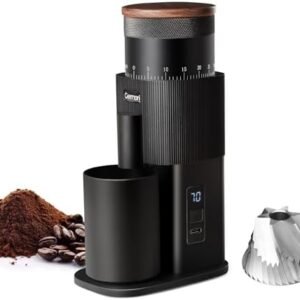
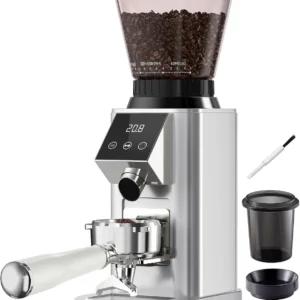
The Tuni G1 package includes the grinder, dosing container, portafilter holder, and a cleaning brush to keep your burrs in top shape. With responsive customer support and a robust build, this grinder is the perfect investment for your home coffee station.
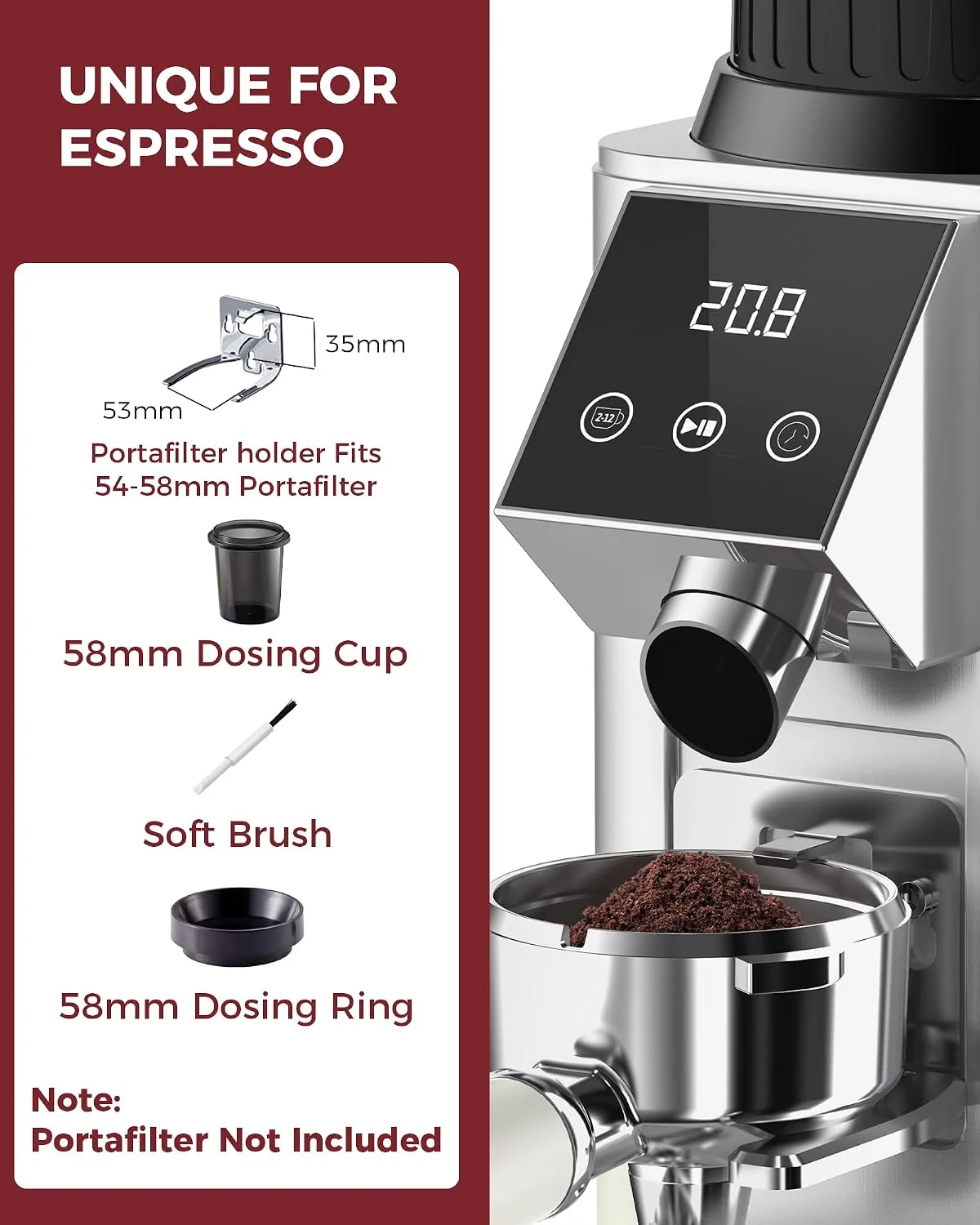
A comprehensive set of accessories to perfect your brewing method.
Experience barista-level consistency with the Tuni G1 today.