
The Gaggia Classic Pro stands as a revered entry point for many aspiring home baristas, a semi-automatic workhorse celebrated for its moddability and commercial-grade components. Yet, as palates evolve and skills sharpen, the pursuit of espresso perfection often necessitates an exploration beyond its familiar confines. Choosing the right alternative to the Gaggia Classic Pro isn’t merely about finding a replacement; it’s about identifying a machine that aligns with your elevated expectations for temperature stability, pressure profiling, steam power, and overall shot consistency. It’s an upgrade journey where nuanced engineering dictates the very character of your morning ritual, transforming good espresso into truly exceptional. Understanding these distinctions is paramount for crafting a home espresso setup that truly elevates your craft.
Contents
Beyond the Classic: Elevating Your Home Espresso Experience
1. La Pavoni Professional
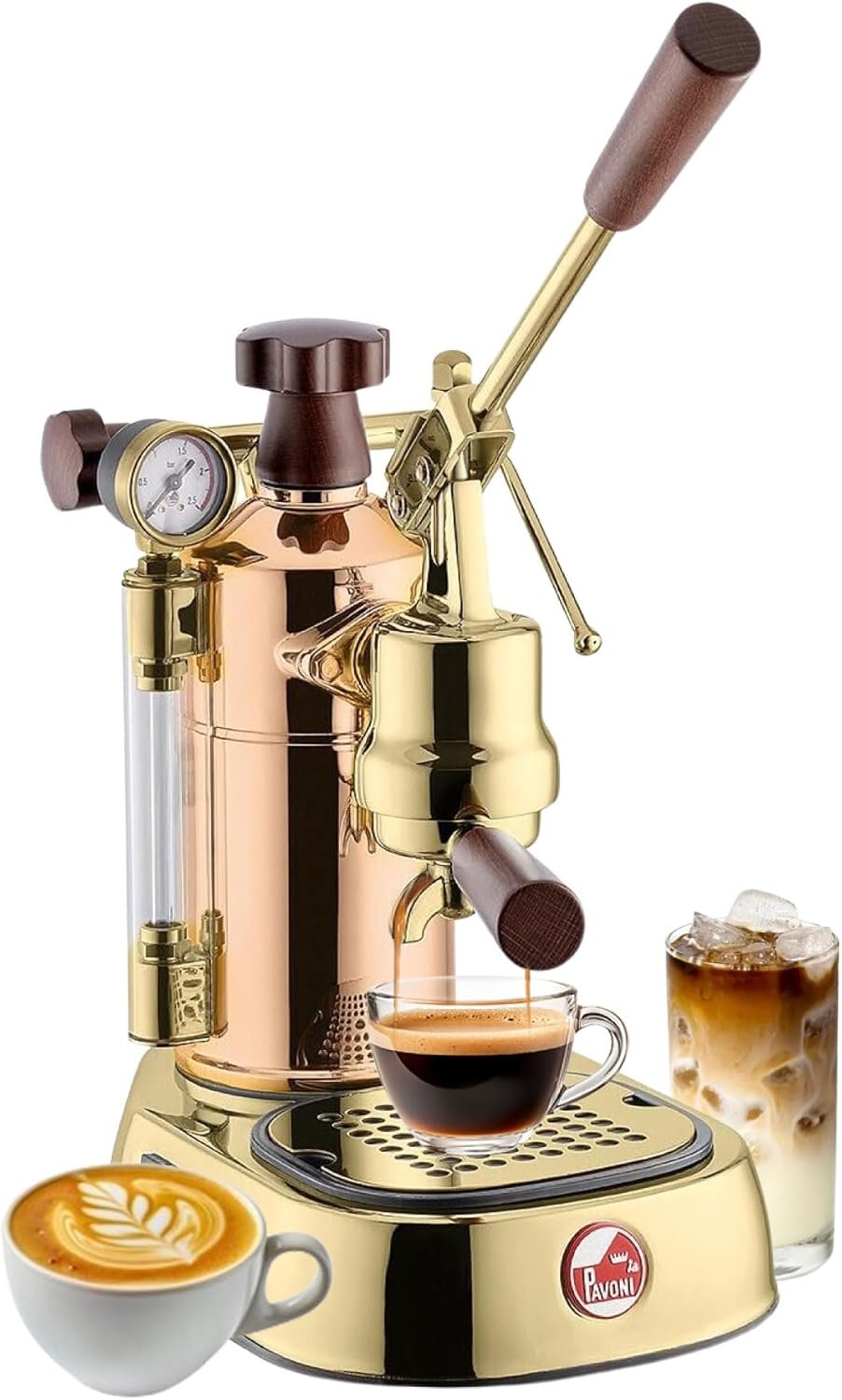
Expert Rating: 4.8/5 Stars | Est. Price Bracket: $1445.17
The La Pavoni Professional is not merely an espresso machine; it is a statement piece, an homage to the craft, demanding precision and rewarding dedication. This Italian-made lever system offers an unparalleled, tactile espresso experience for those who truly wish to master the art.
Technical Breakdown
- Manual Piston-Driven Lever: This core mechanism provides the operator with absolute, real-time control over pre-infusion duration and extraction pressure ramp-up, critical for bespoke espresso profiles.
- 38 oz. Copper Boiler: The substantial boiler capacity allows for approximately 16 two-ounce servings. Its copper construction offers excellent thermal conductivity, crucial for rapid heat-up and efficient temperature recovery between pulls, though thermal stability during longer sessions requires mindful management.
- Integrated Pressure Gauge & Thermostat: A top-mounted pressure gauge provides immediate visual feedback on extraction pressure, aiding in grind and tamp adjustments. The internal thermostat maintains boiler temperature within operational parameters and functions as a safety cutoff.
- Bottomless Portafilter: Standard inclusion of a bottomless portafilter is invaluable for diagnostic purposes, exposing channeling, uneven extractions, and providing direct feedback for puck preparation refinement.
- Copper & Brass Construction: The polished copper boiler paired with a solid brass base not only dictates the aesthetic but also contributes significantly to the machine’s thermal mass and long-term structural integrity.
The Real-world Performance
When properly dialed in—a process demanding considerable patience and meticulous attention to grind, dose, and tamp—the La Pavoni Professional yields an espresso shot that is profoundly rich and nuanced. Temperature stability, while not PID-controlled, can be managed effectively through disciplined flush techniques and grouphead temperature surfing, allowing for repeatable extractions. The crema produced is typically dense, persistent, and exhibits excellent tiger-striping, testament to effective pressure and optimal extraction, provided the user has mastered the lever operation.
Who is this for?
This machine is for the dedicated espresso enthusiast eager to master the craft of manual extraction in a home environment.
Data Breakdown
| Specification | Detail |
|---|---|
| Boiler Capacity | 38 oz (1.12 L) |
| Operation Type | Manual Piston Lever |
| Construction Materials | Copper Boiler, Brass Base, Wood Accents |
| Included Portafilter | Bottomless |
| Maximum Servings (2oz) | 16 |
| Pressure Monitoring | Integrated Gauge |
The Good:
- Unparalleled manual control over extraction for bespoke espresso.
- Iconic, heirloom-quality copper and brass construction.
- Produces exceptionally rich, nuanced shots with proper technique.
- Bottomless portafilter for precise extraction diagnostics.
- Environmentally friendly with minimal plastic components.
The Trade-offs (Cons):
- Steep learning curve requires significant dedication and practice.
- Temperature stability relies on user technique (no PID).
- Not ideal for high-volume entertaining or rapid consecutive shots.
- Higher price point demands commitment to the craft.
- Milk steaming can be challenging to master.
2. Breville Duo Temp Pro
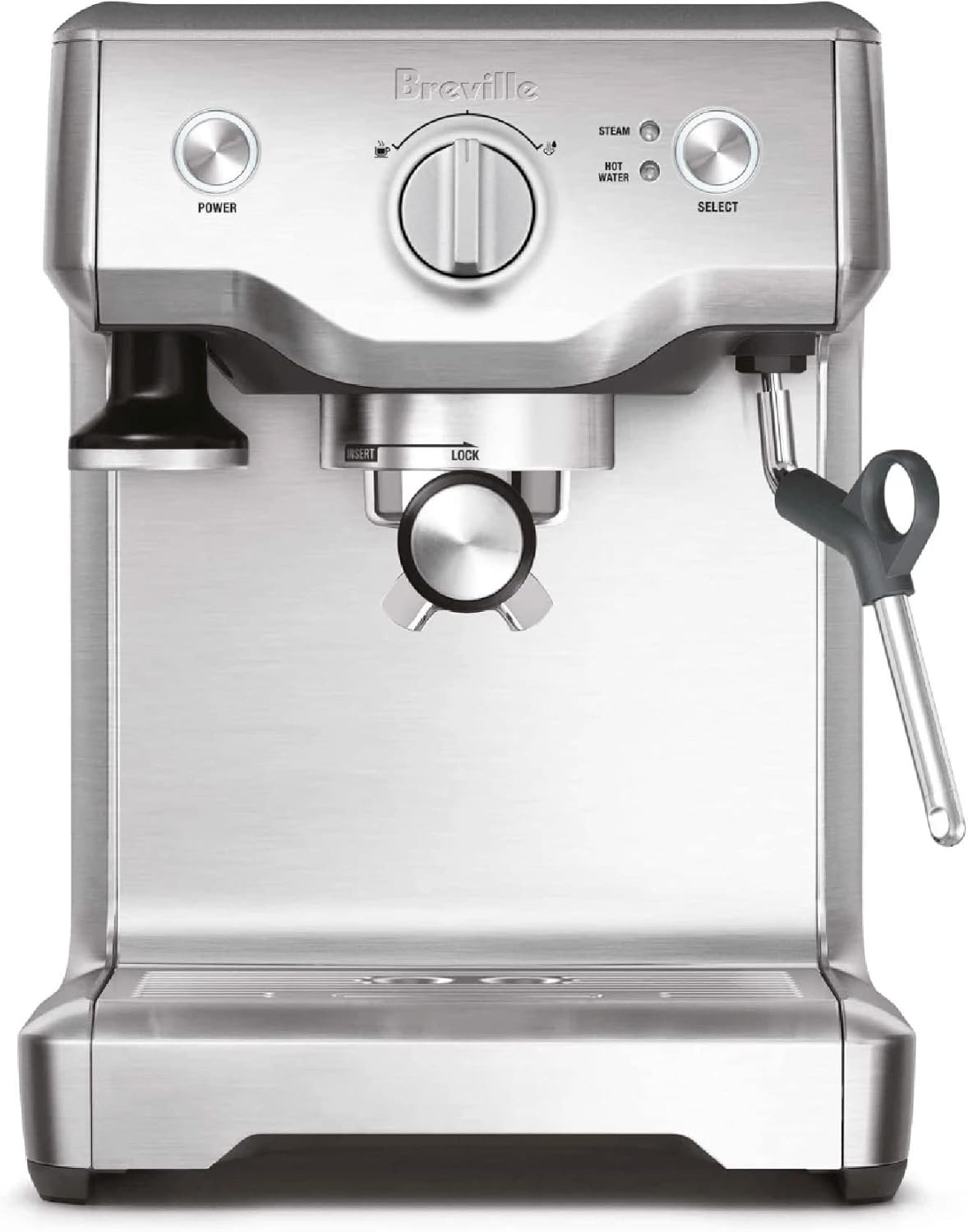
Expert Rating: 4.5/5 Stars | Est. Price Bracket: $689.99
The pursuit of third wave specialty coffee at home often demands equipment capable of precise technical execution. The Breville Duo Temp Pro endeavors to meet this challenge, promising balanced flavors through meticulous extraction and temperature control. This review delves into its engineering and performance, evaluating its claim to deliver café-quality results in your kitchen.
Technical Breakdown
- Precise Espresso Extraction (Low Pressure Pre-Infusion): Crucial for an even saturation of the coffee puck, the low-pressure pre-infusion phase gently expands the grind bed. This mechanism prevents channeling, ensuring uniform flavor extraction across the entire puck and optimally balancing sweetness, acidity, and bitterness in the final shot.
- Water Temperature Control (1600W Thermocoil): The integrated 1600W Thermocoil, featuring a stainless steel water path, is engineered for rapid heating and thermal stability. This precise temperature regulation is paramount for consistent espresso extraction, as even slight variations can drastically alter flavor profiles.
- Manual Microfoam Milk Texturing: Utilizing a high-power 1600W element dedicated to steaming, the Duo Temp Pro generates ample, dry steam. This capability is essential for creating fine, glossy microfoam, allowing the user precise control over milk texture for superior mouthfeel and the execution of intricate latte art.
- Auto Purge: Post-steaming, the machine automatically purges the residual heat from the Thermocoil. This critical function ensures the group head rapidly returns to the optimal espresso extraction temperature, preventing subsequent shots from being over-extracted or burnt due to elevated heat.
- Maintenance Indicator: A practical system of alerts informs the user when cleaning cycles are required and when the drip tray needs emptying. This feature streamlines routine maintenance, contributing to the machine’s longevity and consistent operational performance.
The Real-world Performance
In practice, the Duo Temp Pro delivers a consistently balanced espresso, largely due to its effective low-pressure pre-infusion and the stable thermal environment created by its 1600W Thermocoil. Shots exhibit a pleasing crema and a flavor profile that truly showcases the nuanced characteristics of specialty beans, devoid of common extraction flaws like excessive bitterness or sourness. The dedicated steam element provides sufficient power to create high-quality microfoam, allowing for excellent milk integration and successful attempts at latte art, a critical factor for milk-based beverages.
Who is this for?
This machine is ideal for the discerning home barista seeking advanced technical control without overwhelming complexity, paired with a capable grinder.
Data Breakdown
| Specification | Detail |
|---|---|
| Power | 1600 Watts |
| Voltage | 110 to 120V |
| Water Tank Capacity | 61 oz |
| Heating System | 1600W Thermocoil (Integrated Stainless Steel Water Path) |
| Pre-infusion | Low Pressure |
| Warranty | 1 Year Limited Product Warranty |
The Good:
- Effective low-pressure pre-infusion for even extraction.
- Rapid heating and decent temperature stability via 1600W Thermocoil.
- Powerful, dedicated steam element for quality microfoam.
- Convenient auto-purge feature for quick temperature recovery.
- User-friendly maintenance indicators.
The Trade-offs (Cons):
- Thermocoil system may not offer the thermal mass of a traditional boiler for multiple consecutive shots.
- Requires a separate, high-quality grinder for optimal performance.
- Limited direct control over extraction pressure compared to a lever machine.
- Build quality, while good, may not match the longevity of full stainless steel or brass machines.
3. Gaggia Classic Evo Pro
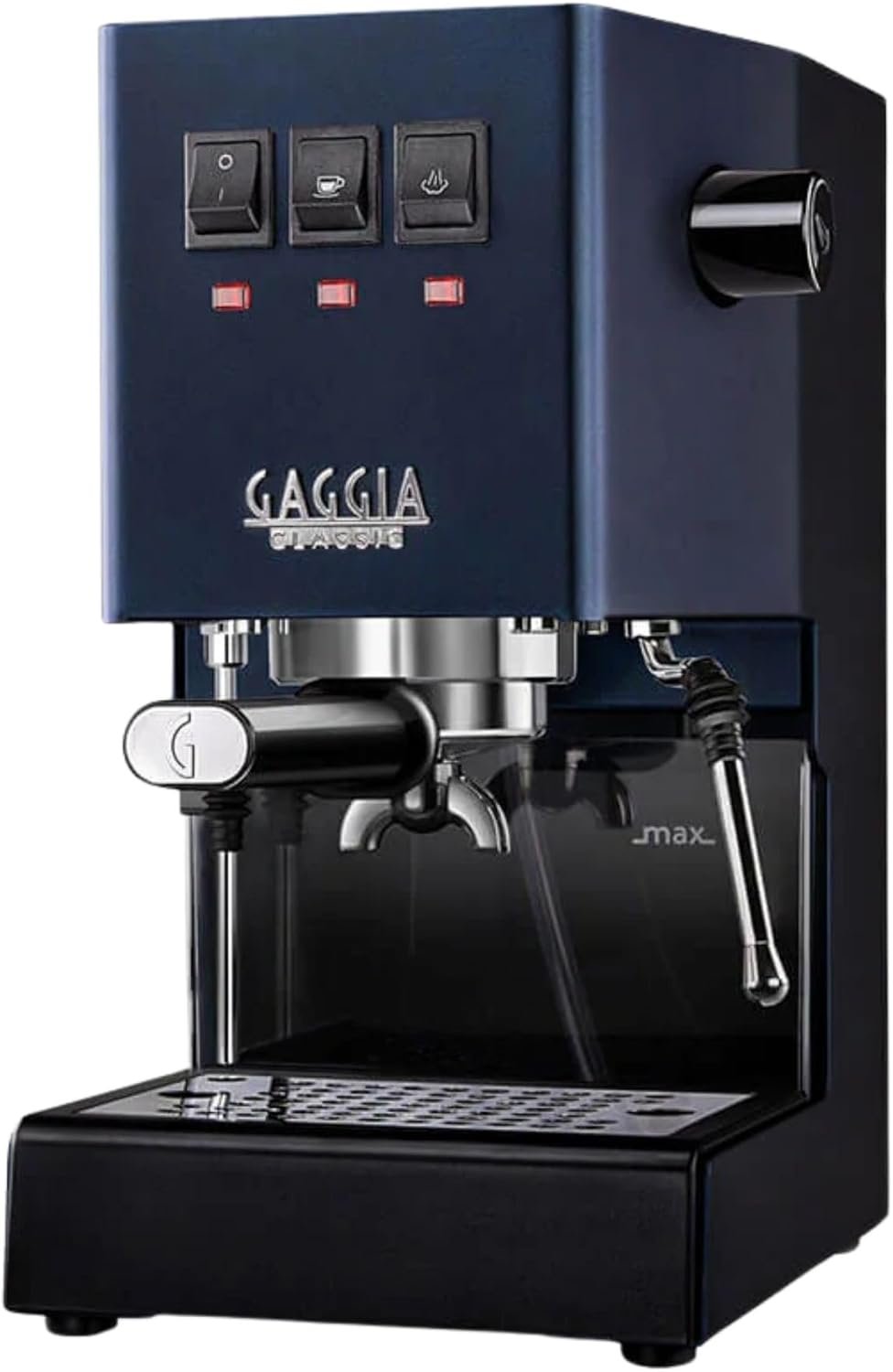
Expert Rating: 4.4/5 Stars | Est. Price Bracket: $529.99
The Gaggia Classic series has long been a gateway for serious home baristas. The Classic Evo Pro iteration promises refined engineering and commercial-grade components, aiming to deliver consistent, high-quality espresso without the astronomical price tag of fully professional equipment. This machine demands attention, precision, and an understanding of extraction fundamentals to truly shine.
Technical Breakdown
- Brass Boiler: The increased capacity brass boiler is a significant upgrade, providing superior thermal mass and stability compared to aluminum alternatives. This translates directly to more consistent brew temperatures, crucial for repeatable extractions, and quicker recovery times between shots or steaming.
- Italian Craftsmanship: Manufactured in Italy with machine-grade components, ensuring robust construction and longevity. This speaks to the build quality and adherence to professional standards, distinguishing it from lesser consumer-grade machines.
- Solid Steel Housing & Brass Group Head: The robust solid steel housing provides structural integrity and minimizes vibration. The brass group head, surrounded by stainless steel, offers excellent thermal conductivity and retention, maintaining a stable temperature at the point of extraction.
- 9-Bar Extraction & 3-Way Solenoid Valve: Crucially, this machine is factory-set for 9-bar extractions, the industry standard for optimal espresso. The integrated 3-way solenoid valve releases pressure from the portafilter post-extraction, resulting in dry pucks for easier cleanup and preventing channeling during subsequent shots.
- Commercial Steam Wand: A true commercial-style steam wand, not a panarello, allows for fine control over milk texturing. Its ball-joint articulation and single-hole tip are essential for achieving microfoam suitable for latte art, requiring skill but rewarding precision.
The Real-world Performance
When paired with a capable grinder and quality beans, the Gaggia Classic Evo Pro consistently produces shots with excellent flavor clarity, showcasing the nuanced notes of the coffee. Temperature stability, a critical factor often overlooked in this price segment, is notably reliable thanks to the brass boiler and group head, leading to less sour or bitter extractions. The 9-bar pressure and three-way valve contribute to a uniform, dense crema that persists, indicating a well-extracted shot. Mastering the steam wand requires practice, but yields exceptionally silky, pourable microfoam for true latte art.
Who is this for?
This machine is ideal for the dedicated home espresso enthusiast ready to invest time in skill development for cafe-quality results.
Data Breakdown
| Feature | Detail |
|---|---|
| Boiler Material | Brass (Increased Capacity) |
| Origin | Italy |
| Housing Material | Solid Steel |
| Group Head | Brass w/ Stainless Steel Surround |
| Extraction Pressure | 9-bar (with 3-way Solenoid Valve) |
| Steam Wand | Commercial-style |
The Good:
- Authentic 9-bar extraction with 3-way solenoid valve for dry pucks.
- Superior thermal stability and recovery with its brass boiler and group head.
- Commercial-style steam wand for excellent milk texturing and latte art.
- Robust, Italian-made construction for durability and longevity.
- Excellent value for its performance and commercial-grade features.
The Trade-offs (Cons):
- No PID for precise temperature control out of the box (modding possible).
- Requires skill development, especially for mastering the steam wand.
- Dependent on a high-quality, stepless grinder for optimal results.
- Water tank access can be somewhat inconvenient.
4. Gaggia Velasca
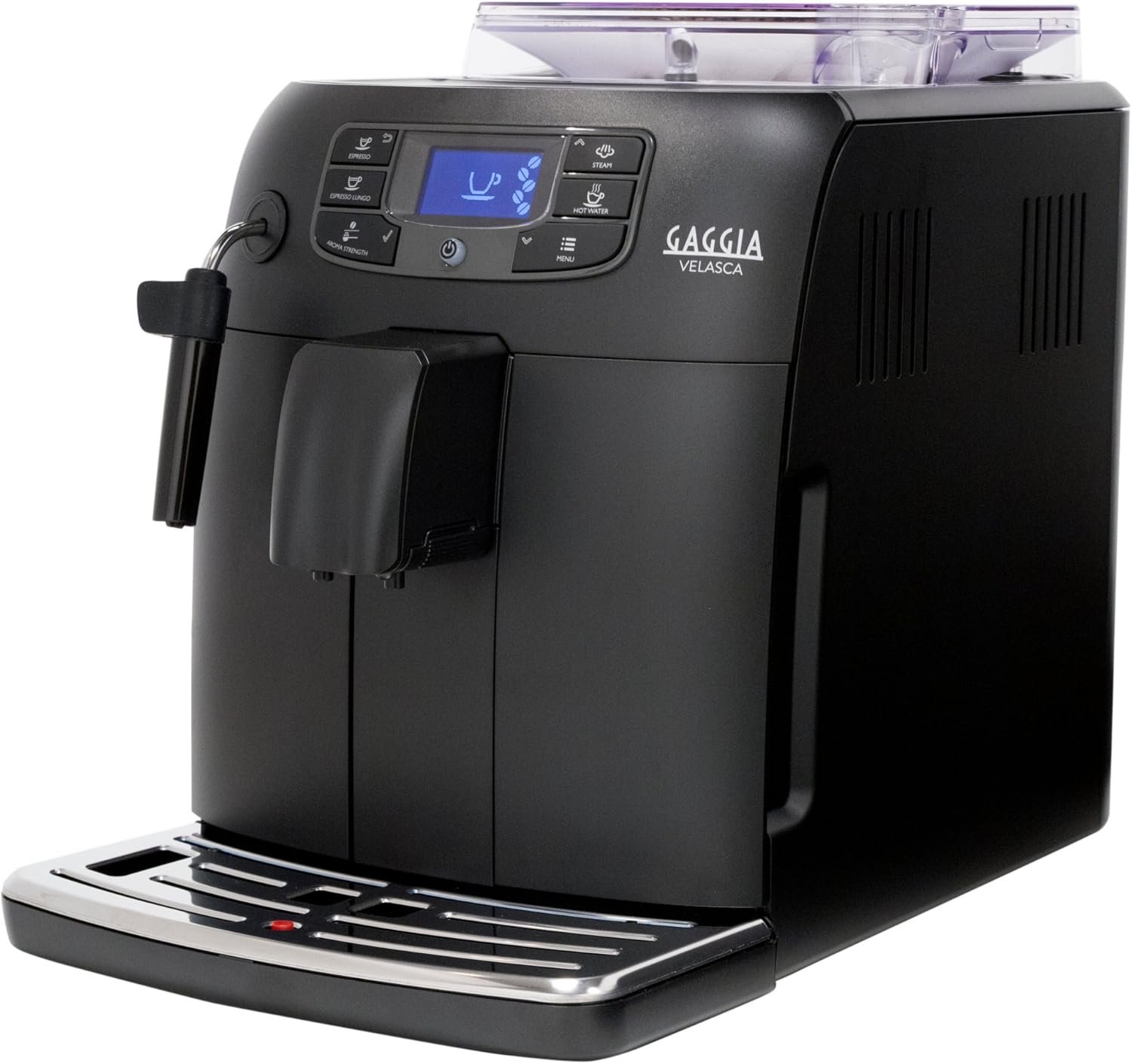
Expert Rating: 4.4/5 Stars | Est. Price Bracket: $655.78
The Gaggia Velasca stands as a testament to super-automatic efficiency, offering a robust platform for consistent espresso and milk-based beverages without the steep learning curve of a traditional semi-automatic. It targets the discerning home user who prioritizes convenience and repeatable quality over deep manual intervention, leveraging Gaggia’s heritage in automated brewing.
Technical Breakdown
- Manual Frothing System: The integrated Pannarello steam wand is designed for deliberate milk texturing. Unlike automated carafes, this wand demands operator skill to achieve microfoam, offering greater control over aeration and temperature for lattes and cappuccinos.
- Programmable Brewing Architecture: Users can define parameters for both Espresso and Espresso Lungo. Crucially, the system offers three distinct temperature settings, allowing for nuanced extraction based on bean roast level and desired flavor profile, ensuring thermal consistency shot after shot.
- Integrated Grinding & Brewing Unit: At its core is a ceramic burr grinder, lauded for its thermal stability and consistent particle size, which minimizes static and heat transfer to the beans. With 10 fineness settings, it provides a precise range for adapting to various bean types, while 5 brew strength settings allow for dose customization. The 10.5oz bean hopper ensures ample capacity for daily use.
- Ergonomic Water Management: The 54oz water reservoir, a generous capacity, is intelligently designed for front-loading access. This prevents the common inconvenience of maneuvering the machine from under cabinetry for refills, enhancing daily usability and placement flexibility.
The Real-world Performance
In practice, the Gaggia Velasca consistently delivers a commendable cup. Flavor profiles are notably balanced, avoiding the harsh bitterness sometimes associated with less capable super-automatics, thanks to its ceramic burr grinder and precise temperature control. Temperature stability during brewing is reliable, contributing significantly to a consistent extraction. Crema, while characteristic of a super-automatic—often uniform and relatively stable—is present and indicative of adequate pressure and bean freshness, providing a visually appealing and texturally satisfying top layer.
Who is this for?
This machine is ideal for individuals or families seeking consistent, low-fuss espresso and milk drinks daily in a home kitchen environment.
Data Breakdown
| Specification | Value |
|---|---|
| Water Reservoir Capacity | 54 oz |
| Bean Hopper Capacity | 10.5 oz |
| Grind Fineness Settings | 10 |
| Brew Strength Settings | 5 |
| Brew Temperature Settings | 3 |
| Frothing Mechanism | Manual Pannarello Wand |
The Good:
- Convenient, consistent, and low-fuss super-automatic operation.
- Integrated ceramic burr grinder for fresh, consistent grinds.
- Programmable brew parameters (temperature, strength, volume).
- Front-loading water reservoir for easy access.
- Delivers balanced espresso flavor profiles for its category.
The Trade-offs (Cons):
- Less manual control over extraction compared to semi-automatic machines.
- Pannarello wand offers less control for true microfoam than commercial wands.
- Higher upfront cost than entry-level semi-automatics.
- Internal grinder means less flexibility for experimenting with external grinders.
- Cleaning and maintenance of the brew unit are still required.
5. Delonghi EC680R DEDICA
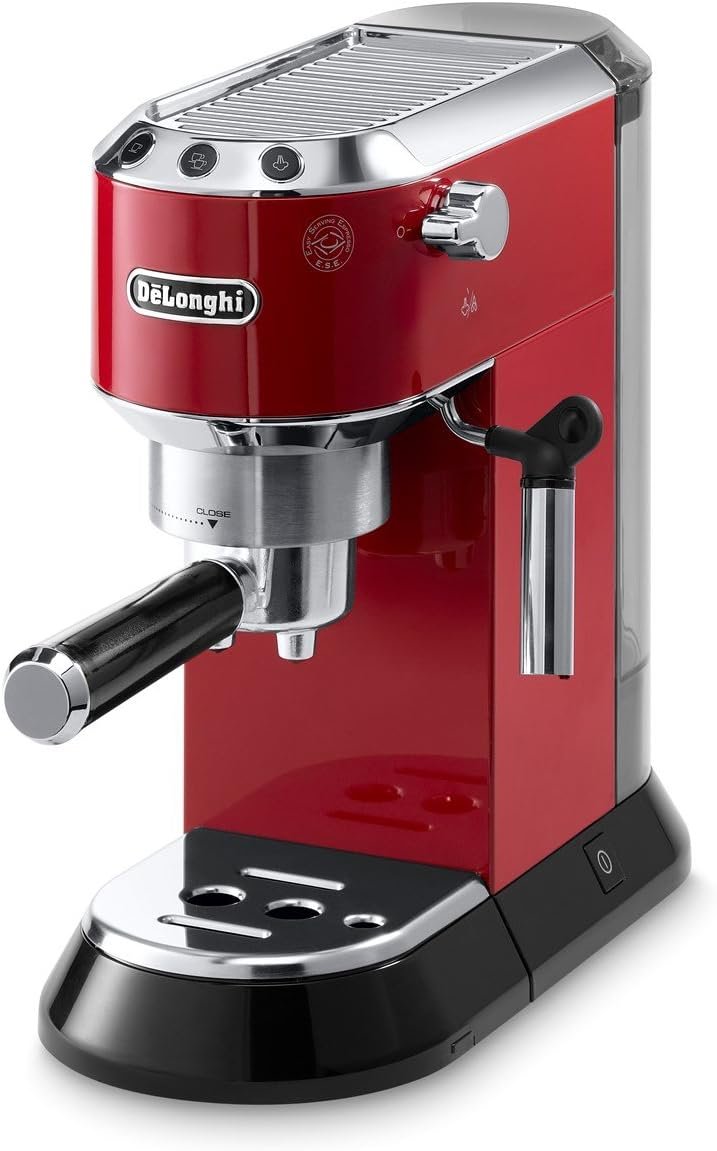
Expert Rating: 4.0/5 Stars | Est. Price Bracket: $149.99
The Delonghi EC680R DEDICA presents itself as a compact solution for home espresso enthusiasts. While its footprint is minimal, a rigorous technical evaluation is essential to discern its capabilities and limitations within the nuanced world of true espresso extraction.
Technical Breakdown
- 15-Bar Pump System: This machine employs a 15-bar vibratory pump. While marketing often highlights higher bar pressure, optimal espresso extraction typically occurs around 9 bars. The 15-bar rating primarily indicates the pump’s maximum pressure capability, not the consistent pressure delivered to the coffee puck, especially in conjunction with the machine’s likely pressurized portafilter designed for user-friendliness.
- Thermo Block Technology: The integrated thermoblock system facilitates rapid heating, allowing the machine to reach brewing temperature quickly. This design is efficient for single-shot preparation and reduces waiting times between cycles, though its thermal mass can be a limiting factor for consecutive extractions and maintaining absolute temperature stability over extended periods.
- Automatic Flow Stop: This feature provides pre-programmed single or double shot volumes, automatically ceasing water flow. While convenient for consistency in volume, it inherently limits manual control over extraction time and yield, which is critical for dialing in specific roasts and achieving precise flavor profiles.
- Manual Cappuccino System: The machine includes a steam wand, generally of the Panarello type, designed to simplify milk frothing for cappuccinos and lattes. While user-friendly for beginners, achieving fine, consistent microfoam for advanced latte art or optimal milk texture is significantly more challenging than with a commercial-grade, single-hole steam tip.
- Maximum Cup Height: 3.14 inches: This dimension dictates the permissible cup size directly beneath the portafilter spouts. For taller vessels, the drip tray would need to be removed, potentially compromising stability and drip management.
The Real-wold Performance
In practical application, the EC680R DEDICA delivers a relatively consistent espresso shot for its category. Flavor profiles tend to be robust, though often lack the intricate nuance achievable with non-pressurized systems and precise grind control. Temperature stability, aided by the thermoblock, is adequate for individual shots but can fluctuate when pulling multiple in quick succession. Crema is generally present and visually appealing, a direct consequence of the pressurized portafilter, but may be lighter in body and dissipate faster than crema produced under ideal 9-bar extraction from freshly ground, optimally prepared coffee.
Who is this for?
This machine is best suited for individuals entering the home espresso world seeking convenience, speed, and compact design without the steep learning curve of advanced equipment.
Data Breakdown
| Specification | Detail |
|---|---|
| Pump Type | 15-Bar Vibratory |
| Heating System | Thermo Block |
| Flow Control | Automatic Flow Stop (Programmable) |
| Milk System | Manual Cappuccino (Panarello-style) |
| Maximum Cup Height | 3.14 inches |
| Portafilter Design | Pressurized |
The Good:
- Extremely compact design, ideal for small kitchens.
- Fast heat-up time thanks to thermoblock technology.
- Affordable entry point into home espresso.
- Automatic flow stop for programmed shot volumes.
- Easy to use for beginners.
The Trade-offs (Cons):
- Pressurized portafilter limits true espresso quality and control.
- 15-bar pump often results in over-extraction or reduced nuance.
- Panarello wand makes achieving true microfoam challenging.
- Limited thermal stability for consecutive shots.
- Small cup clearance can be inconvenient.
Summary Verdict: Top Picks Compared
| Image | Product | Rating & Price | Action |
|---|---|---|---|
|
La Pavoni Professional | 4.8 Stars $1445.17 |
Check Price |
|
Breville Duo Temp Pro | 4.5 Stars $689.99 |
Check Price |
|
Gaggia Classic Evo Pro | 4.4 Stars $529.99 |
Check Price |
|
Gaggia Velasca | 4.4 Stars $655.78 |
Check Price |
|
Delonghi EC680R DEDICA | 4.0 Stars $149.99 |
Check Price |
Essential Factors for Your Espresso Upgrade
Stepping beyond a foundational machine like the Gaggia Classic Pro demands a deeper understanding of the technical underpinnings that define superior espresso. Here are two critical factors to consider when evaluating alternatives:
1. Temperature Stability & Control
The temperature of your brew water is arguably the most critical variable in espresso extraction, directly influencing solubility and the balance of flavors. Machines achieve this stability through various heating systems:
- Boilers: Found in most semi-automatic machines (like the Gaggia Classic Evo Pro and La Pavoni Professional), boilers, especially brass ones, offer significant thermal mass. This means they heat up and retain heat more consistently, leading to stable brew temperatures crucial for repeatable, quality shots. They recover well between shots, but often benefit from temperature surfing techniques or a PID controller for absolute precision.
- Thermoblocks: Common in compact and super-automatic machines (such as the Breville Duo Temp Pro and Delonghi EC680R DEDICA), thermoblocks heat water on demand. They are incredibly fast, ideal for quick startup and rapid steaming. However, their lower thermal mass can lead to greater temperature fluctuations during prolonged extraction or consecutive shots, potentially impacting flavor consistency.
For a genuine upgrade, prioritize machines with robust boiler systems and, ideally, a PID (Proportional-Integral-Derivative) controller for digital temperature management, ensuring unparalleled consistency from shot to shot.
2. Extraction Pressure & Pre-infusion
Optimal espresso extraction typically occurs at around 9 bars of pressure. While many entry-level machines boast 15-bar pumps, this often refers to the pump’s maximum capacity, not the pressure delivered to the coffee puck, especially when paired with pressurized portafilters.
- 9-Bar Extraction with 3-Way Solenoid Valve: Machines designed to extract at or near 9 bars (like the Gaggia Classic Evo Pro) provide the ideal environment for a balanced shot, especially when combined with a non-pressurized portafilter. A 3-way solenoid valve is crucial here, releasing residual pressure from the puck after extraction, resulting in dry, easily removable pucks and preventing channeling.
- Low-Pressure Pre-infusion: This technique, featured in machines like the Breville Duo Temp Pro, gently saturates the coffee puck with low-pressure water before the full extraction pressure is applied. This even saturation helps to prevent channeling, ensures uniform extraction, and unlocks the full spectrum of flavors in your coffee.
An upgrade should move you towards machines that offer true 9-bar extraction with a 3-way solenoid and, ideally, customizable pre-infusion, giving you finer control over the extraction process and significantly improving the quality and consistency of your espresso.
