The pursuit of the perfect espresso shot is an intricate dance of variables: precise grind size, consistent water temperature, and optimal pressure. For enthusiasts considering the renowned Philips 3200 Series, the quest for bean-to-cup convenience often leads to a deeper inquiry into its capabilities and, more importantly, the myriad of advanced best philips 3200 alternatives that promise enhanced control, superior milk frothing, or simply a more refined user experience. As elite reviewers at BaristaManual.com, we understand that a machine’s true value is measured not just by its specifications, but by its ability to consistently deliver a superlative extraction, shot after shot. This deep dive will dissect the leading contenders, evaluating their engineering, real-world performance, and suitability for various barista aspirations, ensuring your next smart espresso choice elevates your daily ritual.
Contents
Beyond the Baseline: Advanced Philips Super-Automatic Espresso Machines
1. PHILIPS 4300 Fully Automatic Espresso Machine
Expert Rating: 4.1/5 Stars | Est. Price Bracket: $549.00
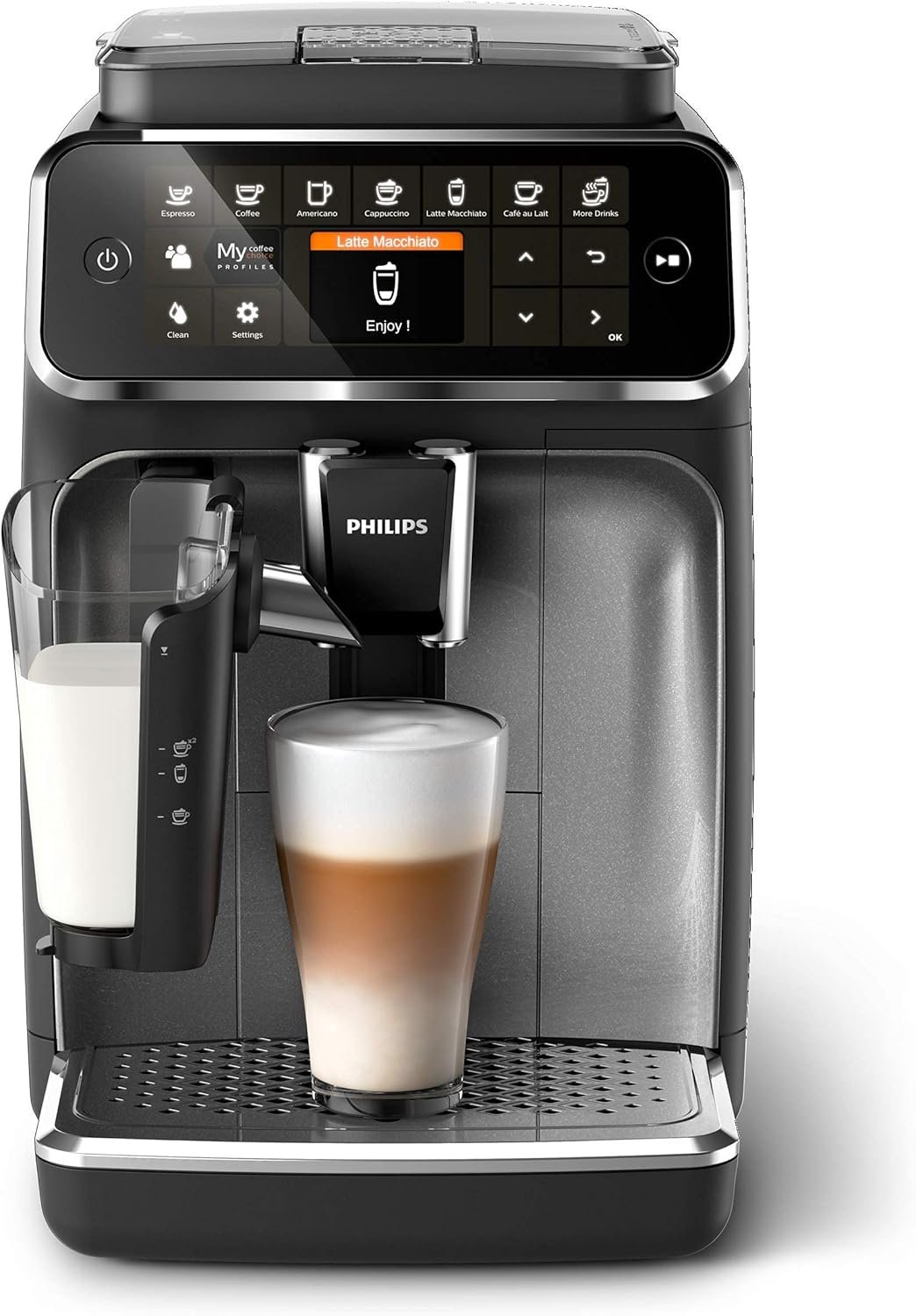
The Philips 4300 Series with LatteGo presents itself as an approachable automatic espresso solution, targeting consistent beverage delivery with minimal user intervention. Our assessment drills into its engineering efficacy and the practical output quality, evaluating its claim of eight distinct coffee preparations.
Technical Breakdown
- Beverage Architecture: The machine is pre-programmed for eight distinct coffee recipes, ranging from espresso to milk-based beverages. Users are granted granular control over coffee length (volume), strength (grind dosage/extraction time), and brewing temperature, allowing for a degree of personalization beyond mere preset selection.
- LatteGo Milk System: Philips’s LatteGo system is a two-part, tube-free milk carafe designed for rapid frothing and simplified cleaning. It integrates an external chamber where milk is frothed via air injection before being dispensed. This design prioritizes hygiene and speed over complex steam wand manipulation.
- User Interface and Profiles: An intuitive Thin-Film Transistor (TFT) display utilizes icon-driven menus for navigation. This facilitates access to customization options and system settings. The inclusion of two distinct user profiles is a notable feature, permitting individual preferences for coffee parameters to be saved and recalled.
- Brew Group & Boiler System: While specifics on boiler material and brew group construction are not detailed, the ability to adjust temperature implies an underlying thermoblock or similar heating element capable of consistent temperature regulation for various beverage types. The automated nature suggests an integrated, self-cleaning brew group.
- Accessory Provision: The retail package includes essential operational tools: a coffee scoop, the LatteGo milk carafe, and a comprehensive user manual. It is important to note the absence of consumables such as water filters, lubrication, or water hardness testing strips, necessitating separate acquisition for optimal long-term maintenance.
The Real-world Performance
In practical operation, the Philips 4300 consistently delivers beverages with commendable thermal stability, minimizing significant temperature drops from brew head to cup. Espresso extraction yields a dense, uniform crema, indicative of adequate pressure and grind consistency for an automated system. Milk-based drinks benefit from the LatteGo system’s ability to produce a microfoam that, while not equivalent to professional manual steaming, is suitably fine-textured for common espresso beverages, presenting a reliable, repeatable result without demanding manual technique.
Who is this for?
This machine is engineered for the home user demanding consistent automated coffee and milk beverages with minimal interaction.
Data Breakdown
| Specification | Detail |
|---|---|
| Number of Beverages | 8 Pre-programmed |
| Milk System Type | LatteGo (2-part, tube-free) |
| User Profiles | 2 Customizable Profiles |
| Display Type | Intuitive TFT with Icons |
| Adjustable Parameters | Length, Strength, Temperature |
| Included Accessories | Scoop, Milk Carafe, Manual |
The Good:
- Offers 8 customizable coffee recipes, including milk-based drinks.
- LatteGo system is highly convenient, hygienic, and easy to clean, producing reliable milk froth.
- Intuitive TFT display with two user profiles for personalized settings.
- Consistent thermal stability and dense crema for an automated machine.
- Automated self-cleaning brew group minimizes maintenance effort.
The Trade-offs (Cons):
- Milk foam, while good, may not achieve the microfoam quality of professional manual steaming.
- Essential consumables like water filters and descaling agents are not included and must be acquired separately.
2. Philips 3200 Series (LatteGo EP3241/74)
Expert Rating: 4.0/5 Stars | Est. Price Bracket: $584.00
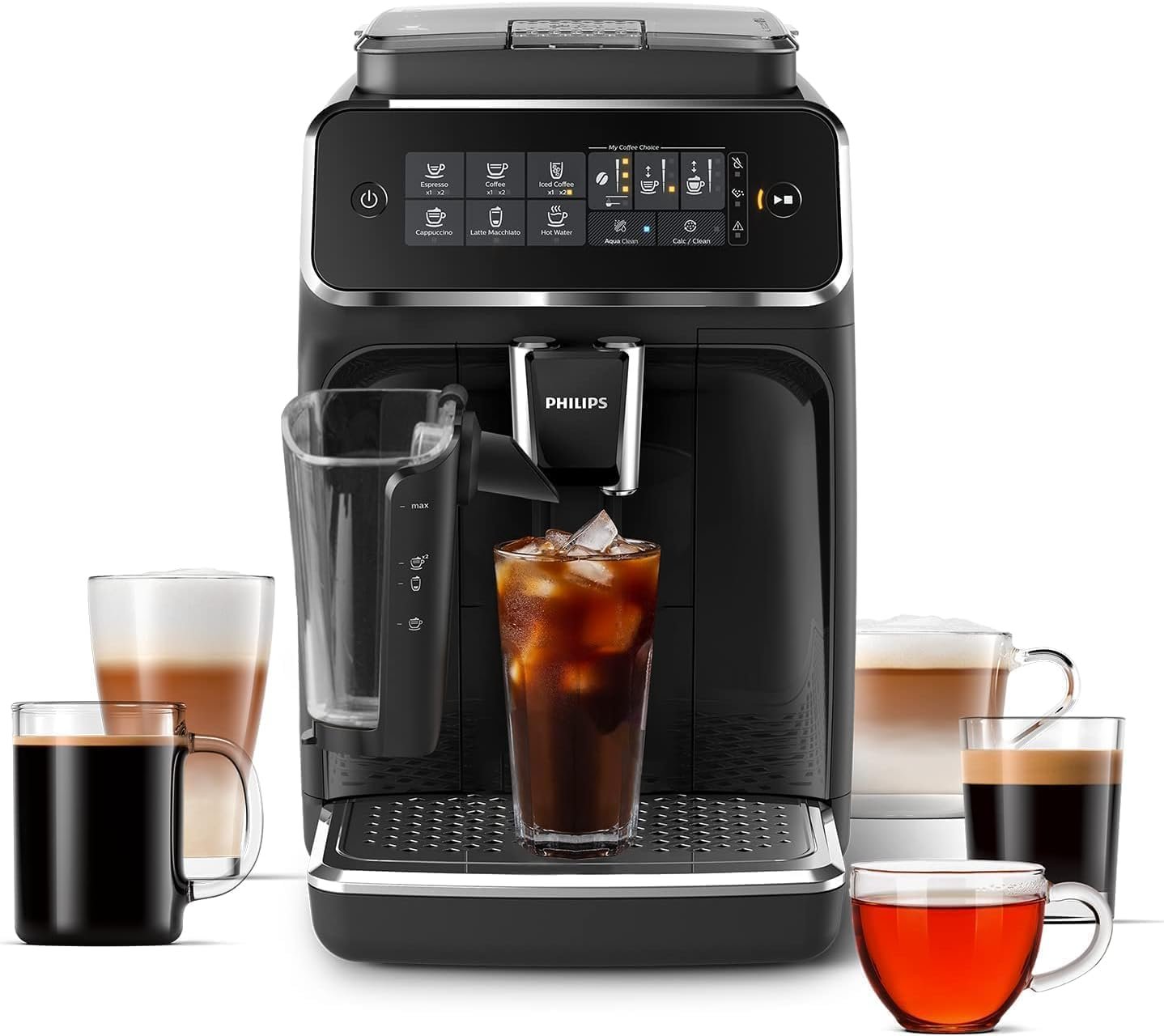
The Philips 3200 Series presents itself as a fully automatic solution for the casual coffee enthusiast venturing beyond basic brewing methods. While its promise of convenience is undeniably alluring, we delve into whether its automated processes truly deliver the nuanced control and quality expected by discerning palates in a premium home setup.
Technical Breakdown
- LatteGo Milk System: This external, two-part frothing system is engineered for consistent microfoam generation via rapid air-infusion, directly into the milk carafe. Its design prioritizes hygiene and simplified maintenance, minimizing internal tubing and contact points, which reduces bacterial proliferation and streamlines cleaning cycles.
- Aroma Extract System: Philips employs a pre-infusion and temperature control algorithm within its brewing unit. This system is designed to stabilize extraction parameters, aiming for an optimal balance between brewing temperature (85-96°C) and aroma release across various bean roasts, though specific pressure profiling capabilities are not detailed.
- AquaClean Filtration: An integrated water purification cartridge designed for ion-exchange and particulate removal. This system significantly extends the machine’s descaling interval, claiming up to 5000 cups before a full descaling procedure is required, provided the filter is regularly replaced as prompted by the machine.
- My Coffee Choice Menu: Offers a degree of user control over beverage parameters, specifically three strength settings (pre-set grind time/dose) and adjustable liquid quantity. This interface simplifies customization for everyday users but lacks granular control over variables such as grind size, brew pressure, or temperature offsets.
The Real-world Performance
In practical application, the 3200 Series delivers a reliably consistent, albeit somewhat generic, espresso profile. The “Aroma Extract” system indeed maintains decent temperature stability, yielding shots that are dependably hot, yet often fall short of extracting the complex aromatics expected from specialty-grade beans. Crema is present and adequately colored, exhibiting a lighter structure that tends to dissipate quicker than a precisely pulled manual shot. The LatteGo system produces a commendable, uniform milk froth that is suitable for basic latte art, though it remains a step below the true microfoam texture achievable with expertly steamed milk.
Who is this for?
This machine is ideal for the busy professional or household seeking convenient, consistent bean-to-cup coffee with minimal manual intervention.
Data Breakdown
| Specification | Detail |
|---|---|
| Coffee Varieties | Up to 5 Black & Milk-Based + Iced |
| Milk System | LatteGo Frother (2-part) |
| Strength Adjustment | 3 Settings (My Coffee Choice) |
| Descaling Interval | ~5000 cups (with AquaClean filter) |
| User Interface | Intuitive Touch Display |
| Product Model | EP3241/74 |
The Good:
- LatteGo milk system provides consistent, easy-to-clean milk frothing.
- Aroma Extract system ensures good temperature stability and pre-infusion.
- AquaClean filter significantly extends the descaling interval.
- “My Coffee Choice” menu offers convenient, quick customization for daily use.
- Reliable and consistent coffee delivery with minimal manual effort.
The Trade-offs (Cons):
- Espresso flavor profile can be somewhat generic, lacking the nuance of specialty beans.
- Crema can be lighter and dissipate faster than manual extractions.
- Milk froth is suitable for basic latte art but not true barista-level microfoam.
- Limited granular control over advanced parameters like grind size or brew pressure.
3. Philips 3200 Series (Classic Milk Frother EP3221/44)
Expert Rating: 4.2/5 Stars | Est. Price Bracket: $929.00
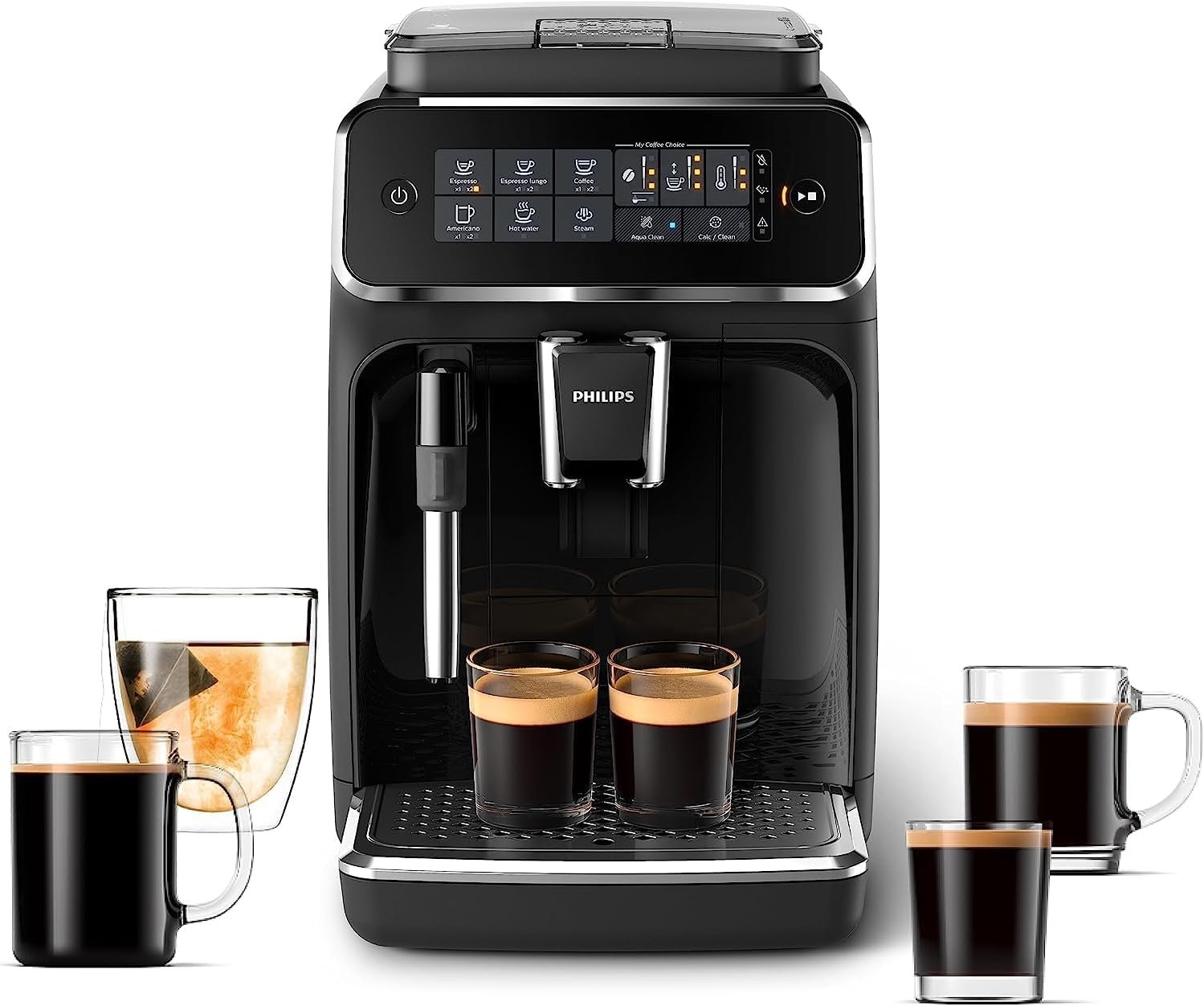
The Philips 3200 Series EP3221/44 aims to bridge the gap between convenience and quality for the home enthusiast. As a fully automatic espresso machine, its proposition is simplicity, but we delve deeper into whether its execution delivers on the promise of true coffee excellence.
Technical Breakdown
- 100% Ceramic Grinder: Utilizes ceramic burrs, theoretically minimizing heat transfer during grinding, which can degrade bean aromatics. This choice generally provides a consistent grind profile, crucial for proper extraction, though user control over grind fineness is preset.
- Aroma Extract System: This proprietary system is designed to optimize brewing temperature and pre-infusion, a critical factor for maximizing flavor extraction and ensuring a balanced cup. It aims to prevent over or under-extraction by dynamically adjusting parameters.
- Classic Milk Frother System: Not an auto-frother, this is a manual steam wand. It requires user skill to achieve the desired microfoam for lattes and cappuccinos, offering greater control over texture compared to automated systems, but demanding practice.
- AquaClean Filter Integration: The machine incorporates an AquaClean water filter, which purifies incoming water, reducing limescale buildup. This system significantly extends the descaling interval, theoretically up to 5000 cups, contingent on strict filter replacement protocols.
The Real-wold Performance
In practical application, the 3200 Series delivers a consistent espresso shot, albeit within the confines of its automated parameters. The temperature stability is commendable for its class, crucial for proper extraction without scorching. Crema production is generally adequate, presenting a visual indicator of sufficient pressure and extraction, though its texture can vary based on bean freshness and roast profile. Flavor profiles are clean, leaning towards accessible rather than nuanced, a direct consequence of the fixed extraction parameters. Milk frothing, while manual, allows for respectable microfoam once the user masters the technique, producing drinks with a pleasant texture.
Who is this for?
This machine is ideal for the busy home user seeking consistent, push-button coffee beverages with minimal manual intervention, who also appreciates some control over milk texturing.
Data Breakdown
| Specification | Detail |
|---|---|
| Coffee Varieties | Up to 5 (Black & Milk-based) |
| Grinder Type | 100% Ceramic |
| Milk System | Classic Milk Frother (Manual Steam Wand) |
| Water Filtration | AquaClean Filter |
| User Interface | Intuitive Touch Display |
| Beverage Customization | Strength & Quantity (3 settings) |
The Good:
- 100% Ceramic grinder provides consistent grind with minimal heat degradation.
- Aroma Extract System optimizes brewing temperature and pre-infusion for balanced flavor.
- AquaClean filter reduces limescale and extends descaling intervals.
- Manual steam wand (Classic Milk Frother) offers greater control for skilled users to create nuanced milk texture.
- Commendable temperature stability for consistent espresso shots.
The Trade-offs (Cons):
- Manual frother requires practice and skill, not ideal for those seeking complete automation.
- Grind fineness control is preset, limiting granular adjustment for different beans.
- Flavor profiles are generally clean but may lack the complexity expected by some connoisseurs.
- Higher price point for a machine with a manual frother compared to auto-frothing alternatives.
Summary Verdict: Top Picks Compared
| Image | Product | Rating & Price | Action |
|---|---|---|---|
|
Philips 4300 | 4.1 Stars $549.00 |
Check Price |
|
Philips 3200 LatteGo | 4.0 Stars $584.00 |
Check Price |
|
Philips 3200 Classic | 4.2 Stars $929.00 |
Check Price |
Essential Technical Factors for Smart Espresso Choices
When venturing into the realm of super-automatic espresso machines, especially when exploring best philips 3200 alternatives, two technical pillars profoundly influence your daily coffee experience: the Grinding Mechanism and the Milk System Design.
Grinding Mechanism & Extraction Control: A machine’s grinder is its foundational component. Ceramic burrs, as seen in some Philips models, are favored for their ability to minimize heat transfer during grinding, preserving delicate bean aromatics. The number of grind settings dictates your ability to fine-tune extraction for different roasts and desired shot characteristics. Beyond the grind, a robust extraction control system, often featuring pre-infusion and precise temperature regulation (like Philips’ Aroma Extract System), is paramount. This ensures consistent saturation of the coffee puck and optimal flavor development, preventing under or over-extraction that can lead to sour or bitter notes. The better the control over these factors, the more nuanced and consistent your espresso will be.
Milk System Design & Frothing Quality: The milk system significantly impacts convenience and drink versatility. Automated systems like Philips’ LatteGo offer unparalleled ease of use and cleaning, rapidly producing a consistent, albeit sometimes less refined, froth suitable for lattes and cappuccinos. These systems are ideal for users prioritizing speed and minimal fuss. In contrast, a manual steam wand (Classic Milk Frother) demands user skill and practice but grants supreme control over milk texture, allowing for true microfoam suitable for intricate latte art and a more velvety mouthfeel. Your choice here depends entirely on your commitment to manual technique versus your desire for push-button convenience.
