

In the pursuit of the perfect home espresso, the choice of equipment is paramount. While enthusiasts often gravitate towards high-end semi-automatics, the demand for convenience has propelled super automatic espresso machines into the spotlight. However, navigating the sub-$500 category for a super automatic is a delicate balance. It’s not merely about automating the process; it’s about discerning which machines manage to uphold critical extraction parameters—like consistent grind, stable brew temperature, and adequate pressure—within a constrained budget. A machine that fails in these technical areas, regardless of its automation, will only deliver sub-par results. Our objective is to identify those rare contenders that genuinely empower you to craft a satisfying shot without compromising the fundamental science of espresso extraction.
Contents
The Contenders: Our Top Super Autos Under $500 Revealed
1. Philips 1200-Series Fully Automatic Espresso Machine
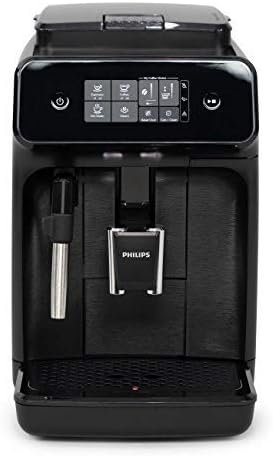
Expert Rating: 4.4/5 Stars | Est. Price Bracket: $319.00
The Philips 1200-Series presents itself as an accessible entry into automated espresso preparation. Our scrutiny reveals a machine designed for simplicity, prioritizing immediate gratification over the granular control favored by dedicated enthusiasts.
Technical Breakdown
- Intuitive Touch Display & My Coffee Choice: This interface streamlines beverage selection to predefined parameters. While “My Coffee Choice” suggests personalization, it fundamentally refers to preset beverage profiles, limiting true user customization of extraction variables.
- 12-step Grinder Adjustment: The provision of 12 distinct grind settings is commendable for a super-automatic. This range allows for fine-tuning the particle size, critical for optimizing extraction efficiency across various bean roasts, from a near-pulverized espresso grind to coarser settings.
- Classic Milk Frother: This is a manual steam wand, not an automatic carafe system. Its “classic” designation implies a user-driven process for texturing milk. While requiring technique, it offers the potential for superior microfoam compared to some automatic systems, provided the user develops the necessary skill. Its two-part design indeed simplifies post-steaming hygiene.
- 100% Ceramic Grinders: Ceramic burrs are valued for their thermal stability, preventing excessive heat transfer to the beans during grinding, which can degrade volatile aromatics. Their inherent hardness contributes to longevity and consistent particle size distribution over the claimed 20,000-cup lifespan, a significant metric for durability.
- Included Accessories: The standard package includes a scoop and a manual. It is explicitly noted that essential consumable accessories such as water filters, lubrication, or water testing strips are not included, necessitating separate acquisition for optimal machine maintenance and performance from the outset.
The Real-wold Performance
The espresso produced leans towards convenience-driven profiles, generally exhibiting a balanced but often somewhat muted flavor spectrum compared to expertly pulled shots from semi-automatic machines. Temperature stability is acceptable for a super-automatic, delivering beverages that are sufficiently hot for immediate consumption. Crema formation is typically robust, often characterized by a thicker, lighter consistency indicative of aerated extraction, rather than the deep, tiger-striped crema of perfectly extracted artisanal espresso.
Who is this for?
This machine is ideal for the busy individual seeking consistent, push-button coffee beverages with minimal effort and no desire for manual brewing complexities.
Data Breakdown
| Specification | Detail |
|---|---|
| Model | EP1220/04 |
| Grinder Material | 100% Ceramic |
| Grinder Adjustments | 12 Steps |
| Milk System | Classic Milk Frother (Manual Steam Wand) |
| User Interface | Intuitive Touch Display |
| Grinder Lifespan | >20,000 Cups (Ceramic) |
The Good:
- Intuitive Touch Display and ‘My Coffee Choice’ for streamlined operation.
- Commendable 12-step ceramic grinder for fine-tuning particle size and bean integrity.
- Classic Milk Frother offers potential for superior microfoam with acquired skill.
- Durable ceramic grinders ensure thermal stability and longevity.
The Trade-offs (Cons):
- ‘My Coffee Choice’ limits true customization of extraction variables.
- Classic Milk Frother requires manual technique, not truly one-touch.
- Espresso flavor can be muted compared to artisanal extractions.
- Essential consumable accessories (filters, lubrication) are not included.
2. Philips 2200 Series
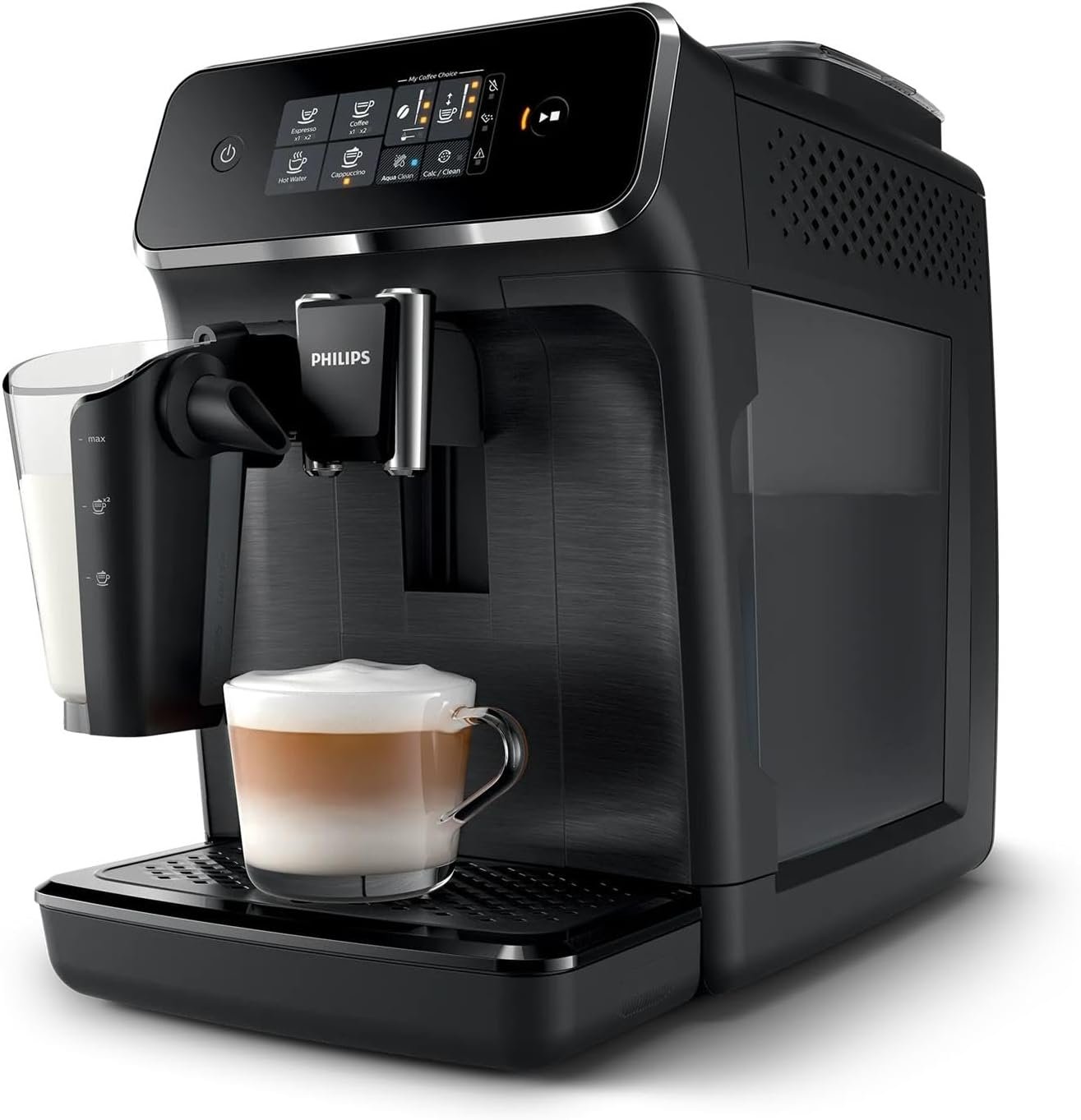
Expert Rating: 4.0/5 Stars | Est. Price Bracket: $348.00
The Philips 2200 Series presents itself as a fully automatic espresso solution aiming for consistent beverage delivery. In a market saturated with “one-touch” claims, we scrutinize its engineering and output to determine if it truly merits a place in the discerning user’s daily ritual.
Technical Breakdown
- LatteGo Milk System: This innovative, two-part frothing system employs a high-velocity air injection mechanism to produce a consistent microfoam layer, designed for easy detachment and rinse. Its tubeless design minimizes bacterial accumulation, a crucial hygienic factor.
- Aroma Extract System: Precision thermal management maintains brewing water temperature strictly between 90°C and 98°C. This narrow window is critical for optimal solubles extraction, preventing under-extraction (sourness) or over-extraction (bitterness) while preserving volatile aroma compounds.
- 100% Ceramic Grinder: Utilizing durable ceramic burrs, this grinder ensures uniform particle size distribution for consistent extraction. Ceramic’s inherent properties prevent heat transfer to the beans during grinding, preserving delicate aromatic oils and extending grinder longevity compared to steel alternatives.
- AquaClean Filter System: An integrated water filtration system that, when regularly replaced as prompted by the machine, significantly reduces limescale buildup. This extends the descaling cycle to an advertised 5000 cups, crucial for machine longevity and maintaining water purity for optimal flavor.
- Intuitive Touch Display: A streamlined, tactile interface providing direct access to pre-programmed beverage profiles and customization parameters via the ‘My Coffee Choice’ menu. This aims for operational simplicity without sacrificing core adjustable variables.
- My Coffee Choice Menu: Offers three distinct settings for beverage strength and volume, enabling users to fine-tune their desired extraction profile and cup fill. This allows for a degree of personalization beyond standard presets.
The Real-world Performance
During evaluation, the Philips 2200 Series demonstrated commendable temperature stability across its espresso and coffee profiles. Crema formation was consistent, exhibiting a respectable hazelnut hue and density indicative of adequate pressure and extraction. While the flavor profiles for straight espresso were generally balanced, showcasing a clean extraction without significant off-notes, the machine truly differentiated itself with its milk-based beverages. The LatteGo system delivered a consistently fine-textured, uniform microfoam, allowing for a smooth integration with the espresso, enhancing mouthfeel without excessive aeration or large bubbles. It’s a reliable performer for daily consistent output rather than peak artisanal quality.
Who is this for?
This machine targets the busy home or small office user seeking consistent, push-button coffee and milk beverages without extensive manual intervention.
Data Breakdown
| Specification | Detail |
|---|---|
| Coffee Varieties | Espresso, Coffee, Cappuccino (3 total) |
| Grinder Material | 100% Ceramic |
| Brewing Temperature | 90-98°C (Aroma Extract System) |
| Milk System | LatteGo (2-part, integrated) |
| Descaling Interval | Up to 5000 cups (with AquaClean filter) |
| User Interface | Intuitive Touch Display |
The Good:
- LatteGo Milk System provides consistent microfoam and is easy to clean.
- Aroma Extract System ensures precise and stable brewing temperatures.
- Durable 100% ceramic grinder preserves bean aromatics and ensures longevity.
- AquaClean Filter system significantly extends descaling intervals.
- Intuitive touch display and My Coffee Choice menu offer good customization for a super-auto.
The Trade-offs (Cons):
- Offers fewer coffee varieties (3 total) compared to some models.
- Focuses on consistent daily output rather than nuanced, artisanal quality.
- Espresso flavor profiles are balanced but not deeply complex.
3. Philips 3200 Series (LatteGo)
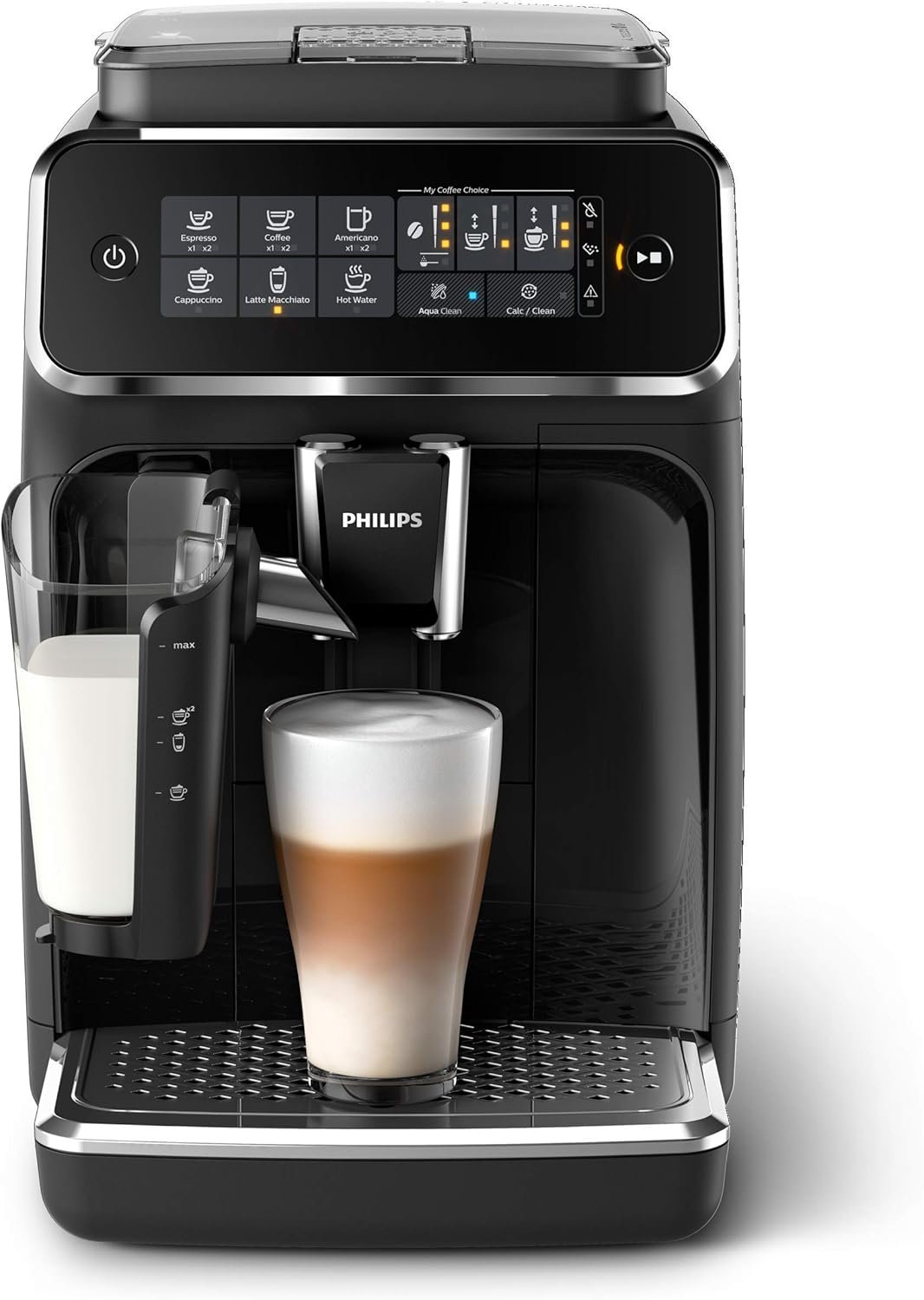
Expert Rating: 4.0/5 Stars | Est. Price Bracket: $449.00
The super-automatic espresso machine segment often promises convenience, yet true technical performance can be elusive. The Philips 3200 Series with LatteGo aims to deliver on this promise, presenting a highly integrated solution for consistent, one-touch beverage creation. We scrutinize its core functionalities to assess its standing in the discerning home barista landscape.
Technical Breakdown
- LatteGo System: This integrated milk frothing mechanism employs a high-speed air injection system within a dedicated frothing chamber. Unlike steam wands, the LatteGo precisely mixes milk and air via a Venturi effect, creating a finely textured, temperature-stable microfoam without direct steam interaction. The splash-free delivery ensures a clean operation and consistent milk protein denaturation for optimal mouthfeel.
- 12-Step Ceramic Grinder: The machine integrates a durable ceramic burr grinder offering 12 distinct grind settings. Ceramic burrs are lauded for their longevity and consistent particle distribution, which minimizes heat transfer to the beans during grinding. The wide adjustment range allows for granular control over particle size, from an ultra-fine espresso grind (critical for optimal extraction) to a coarser profile suitable for drip-style coffee.
- Aroma Extract System: Philips’s proprietary Aroma Extract system is designed to optimize brewing conditions by intelligently regulating both water temperature and flow rate. It maintains the water temperature within a precise window of 90-98°C (194-208°F). This narrow band is crucial for extracting solubles without over-extracting bitter compounds or under-extracting desirable aromatics, ensuring a balanced flavor profile and consistent crema formation.
The Real-world Performance
In practical application, the Philips 3200 Series exhibits commendable consistency. Espresso shots are delivered with appropriate volume stability and a visually appealing, albeit sometimes thin, crema that dissipates predictably. The Aroma Extract system demonstrably maintains stable brewing temperatures, contributing to a clean flavor profile across various roasts. Milk froth produced by the LatteGo system is consistently smooth and well-integrated into milk-based beverages, holding its temperature adequately for an enjoyable drink, though it may lack the intricate microfoam structure achievable with a skilled manual steam wand.
Who is this for?
This machine is for the discerning user prioritizing consistent, one-touch beverage creation over granular manual control.
Data Breakdown
| Specification | Detail |
|---|---|
| Machine Type | Fully Automatic Espresso |
| Grinder Type | Ceramic Burr, 12-step Adjustable |
| Brewing Temperature Range | 90-98°C (Aroma Extract System) |
| Milk System | LatteGo High-Speed Frother |
| Beverage Presets | 5 (Espresso, Coffee, Cappuccino, etc.) |
| Water Flow Control | Intelligent Regulation (Aroma Extract) |
The Good:
- LatteGo system provides consistent, finely textured, and temperature-stable microfoam.
- Durable 12-step ceramic grinder offers precise control and minimizes heat transfer.
- Aroma Extract system optimizes brewing temperature and flow for balanced flavor.
- Splash-free milk delivery ensures a clean operation.
The Trade-offs (Cons):
- Espresso crema can sometimes be thin and dissipate quickly.
- LatteGo system, while convenient, lacks the intricate microfoam possible with a skilled manual wand.
- Prioritizes one-touch convenience over granular manual control for advanced users.
4. Philips 3200 Series (Removable Brew Group)
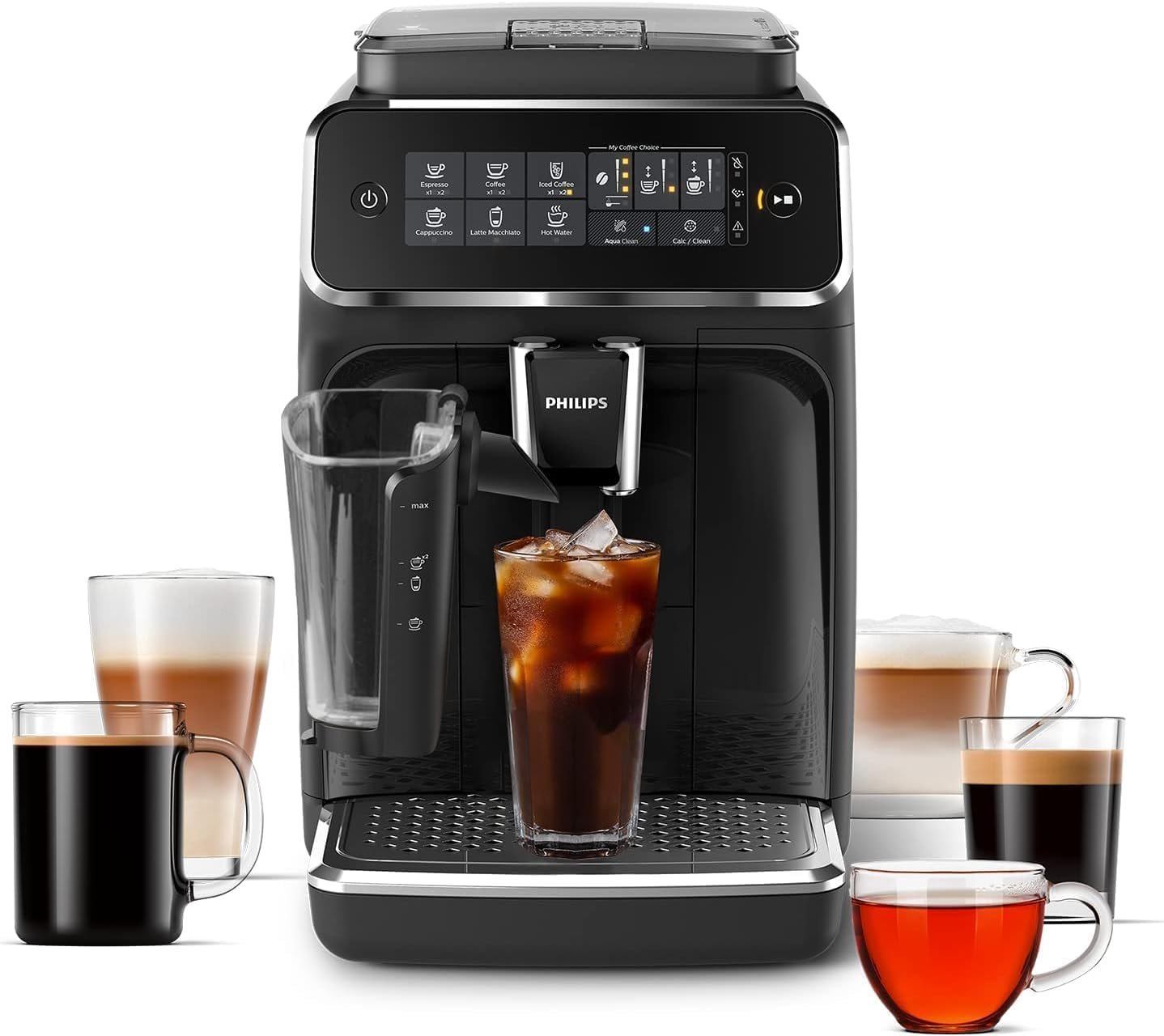
Expert Rating: 4.1/5 Stars | Est. Price Bracket: $449.00
The Philips 3200 Series, marketed as a fully automatic espresso and iced coffee solution, purports to deliver convenience without significant compromise. Our objective assessment delves into its engineered components and purported performance metrics, scrutinizing whether its automated functionalities translate into a technically sound beverage output.
Technical Breakdown
- Removable Brew Group: This design choice facilitates direct and thorough rinsing, critical for preventing mold and rancidity accumulation often overlooked in integrated systems. Its accessibility ensures proper sanitation, which directly impacts the hygienic integrity and flavor neutrality of subsequent extractions.
- LatteGo System: Utilizing cyclonic frothing technology, this system claims microbubble generation at 394 meters per second. This velocity is intended to create a dense, stable milk foam with minimal large air pockets, crucial for achieving appropriate texture in milk-based beverages. Its two-part, tube-free construction also streamlines post-use cleaning protocols.
- Aroma Seal: Engineered to mitigate oxidation and volatile compound degradation, the aroma seal on the bean hopper actively protects the integrity of the whole bean’s inherent aromatics. This feature is fundamental for maintaining consistent flavor profiles over time and concurrently reduces grinder operational noise.
- Durable Ceramic Grinders: The inclusion of 100% ceramic grinders is a deliberate engineering choice, cited for its longevity—rated for 20,000 cups—and its ability to resist thermal transfer during grinding. This reduces the risk of burning beans, preserving their intrinsic flavor compounds, and ensures consistent particle size distribution for optimal extraction.
- Aroma Extract System: This proprietary system is designed to dynamically balance brewing temperature and flow rate. Its function is to prevent over-extraction at elevated temperatures or under-extraction with insufficient heat, aiming for a consistent, balanced extraction profile across varying beverage types.
The Real-wold Performance
The Philips 3200 Series, leveraging its Aroma Extract system, generally produces an espresso with acceptable temperature stability for a super-automatic. Flavor profiles, while consistent, tend to be broad rather than nuanced, reflecting the inherent limitations of fixed parameters. Crema formation is adequate; it is present and visually appealing, though its persistence and textural density may not satisfy the most discerning palate accustomed to artisanal extractions. For iced coffee applications, the machine delivers a cool base, but the efficacy of rapid cooling without dilution remains a point of technical consideration.
Who is this for?
This machine is ideal for users prioritizing automation, consistent basic beverage output, and minimal maintenance in a home or small office environment.
Data Breakdown
| Specification | Detail |
|---|---|
| Brew Group | Fully Removable |
| LatteGo Frothing Speed | 394 meters/second |
| Grinder Material | 100% Ceramic |
| Grinder Lifespan (Min) | 20,000 cups |
| Coffee Varieties | 5 (Espresso, Iced, Milk-based) |
| Bean Hopper Seal | Aroma Seal Integrated |
The Good:
- Removable brew group allows for easy and thorough cleaning, ensuring hygiene and flavor purity.
- LatteGo system produces dense, stable milk foam with a hygienic, tube-free design.
- Aroma Seal on the bean hopper protects bean integrity and reduces grinder noise.
- Durable 100% ceramic grinders ensure consistent particle size and prevent heat transfer.
- Aroma Extract system balances brewing temperature and flow for consistent extraction.
The Trade-offs (Cons):
- Flavor profiles are consistent but tend to be broad rather than nuanced.
- Crema, while visually appealing, may lack the persistence and density desired by connoisseurs.
- Efficacy of rapid cooling for iced coffee without dilution warrants further technical consideration.
Summary Verdict: Top Picks Compared
| Image | Product | Rating & Price | Action |
|---|---|---|---|
|
Philips 1200 | 4.4 Stars $319.00 |
Check Price |
|
Philips 2200 | 4.0 Stars $348.00 |
Check Price |
|
Philips 3200 (ID 906) | 4.0 Stars $449.00 |
Check Price |
|
Philips 3200 (ID 908) | 4.1 Stars $449.00 |
Check Price |
Buying Guide: Key Technical Factors for Super Automatic Espresso Machines Under $500
When investing in a super automatic espresso machine, especially within the sub-$500 budget, two technical aspects stand out as critical differentiators that profoundly impact your daily coffee experience and the longevity of your investment:
1. Grinder Quality and Adjustment: The integrated grinder is the heart of any super automatic. For machines under $500, you’ll primarily encounter ceramic burr grinders, which are commendable for their thermal stability, preventing heat transfer that can prematurely degrade bean aromatics. Look for machines offering a generous number of grind settings, ideally 10 or more. This adjustability is crucial for dialing in the correct particle size for different roasts and desired extraction profiles. A finer grind is essential for a rich, crema-topped espresso, while a slightly coarser setting might suit a larger coffee. Consistent particle size distribution is key to avoiding channeling and ensuring a balanced extraction, directly impacting the flavor profile of your final beverage.
2. Milk System Type and Maintenance: The milk system is often a major point of divergence in super automatics. Within this price bracket, you’ll typically find two main types: a ‘Classic Milk Frother’ (manual steam wand) or an integrated ‘LatteGo’ or similar automatic frothing system. A manual steam wand, while requiring user skill and technique, offers the potential for true microfoam, allowing for latte art and superior texture. However, it demands more effort and cleaning. Automatic systems like Philips’ LatteGo provide one-touch convenience, producing consistent, if not always perfectly textured, milk foam. For these systems, evaluate the ease of cleaning; two-part, tube-free designs are significantly easier to maintain, reducing the risk of bacterial buildup and ensuring hygienic operation. Choose based on your willingness to engage in manual frothing versus prioritizing instant, consistent milk-based beverages.
